
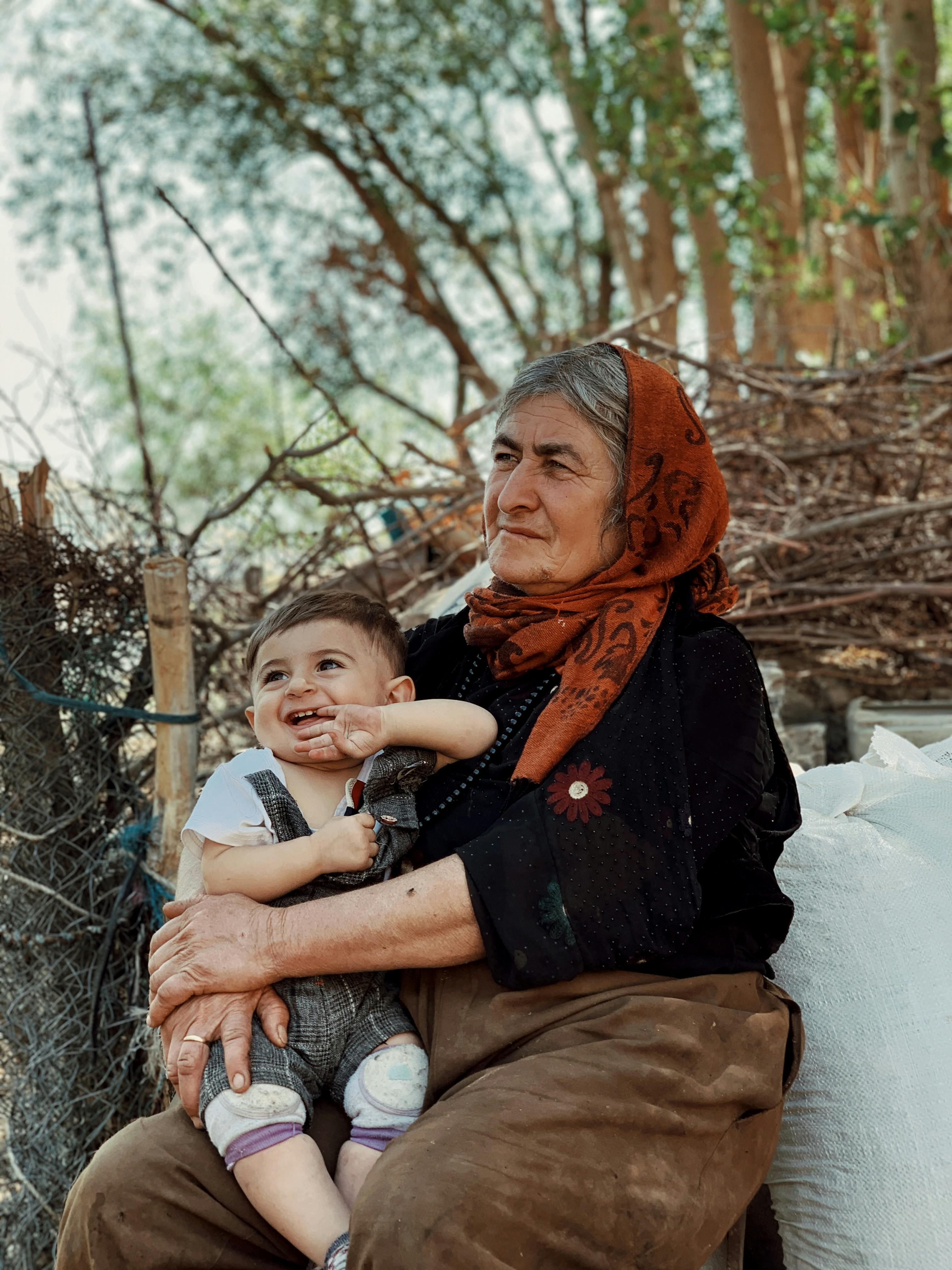
Grandparents’ vital records are crucial for legal processes, family history, and intergenerational identity. A structured family audit can help ensure these records are complete, protected, accessible, and meaningful for future generations.
For many families, grandparents’ documents are the hinge between living memory and more distant ancestry. They are old enough to connect back into earlier generations, yet close enough in time that their records can often still be located, preserved, and interpreted with help from people who knew them.
Vital records related to grandparents, such as birth, marriage, divorce, naturalization, and death certificates, are foundational for both legal processes and family history. They can support estate administration, inheritance claims, insurance matters, pension benefits, and genealogical research.
At the same time, the practical reality inside many households is disordered. Important certificates may be scattered across drawers, basements, file boxes, old envelopes, or different relatives’ homes. Digital copies may exist, but often in unlabelled folders, old phones, or cloud accounts that no one else can access.
“Unsafe” does not only mean at risk of physical destruction. It can also mean invisible, inaccessible, mislabelled, incomplete, or locked behind a device or account when the family needs it most.
A structured family audit of grandparents’ vital records addresses both physical safety and practical accessibility. It is not a legal audit or a substitute for professional advice. It is a household-level review of what exists, what is missing, how records are stored, and who understands the system.
The goal is to move from fragmented evidence and assumptions to an organized, secure, and meaningful archive in which grandparents’ vital records have a clear place.
Understanding vital records in the family context
Vital records usually refer to official registrations of major life events, such as births, deaths, marriages, and divorces. For grandparents’ generation, these records may exist as original certificates, certified copies, photocopies, scanned images, or entries in public or historical registers.
From a family perspective, the category is often broader. It may include naturalization and citizenship papers, military discharge documents, adoption records, church records, wills, powers of attorney, advance directives, and other documents connected to identity, status, family relationships, and end-of-life planning.
For a family audit, it is useful to think in tiers: core civil records, key legal status records, estate-related documents, and supporting records that help explain or verify the family story.
Core records may include birth, marriage, divorce, and death certificates. Key legal status records may include naturalization papers, citizenship documents, adoption records, and military service records. Estate-related documents may include wills, trusts, powers of attorney, beneficiary designations, and health-care directives.
Supporting records can also matter. Church registers, obituaries, family Bibles, letters, cemetery records, photographs, and oral histories may help fill gaps when official records are missing or incomplete.
Why these records matter
Vital records can establish identity, family relationships, dates, places, and legal status. They may be required to claim benefits, administer an estate, close accounts, prove family ties, or support inheritance-related processes.
For genealogy, they are often the backbone of a reliable family tree. Birth and marriage records can establish parentage and marital ties. Death certificates can provide biographical information, burial details, informant names, and connections to other records.
For memory and identity, these records do something more subtle. They anchor family stories in time and place. They help descendants understand migrations, marriages, losses, citizenship changes, military service, family names, and the lives behind those facts.
Grandparents occupy a special role in this process. They may still remember the people, places, and circumstances behind older documents. A certificate may state a date, but a grandparent may explain the story around it.
That is why a family audit should not be treated as paperwork alone. It is also an opportunity to ask questions, record memories, and preserve context before it is lost.
Where vital records are created, stored, and accessed
Official vital records are usually created and maintained by the jurisdiction where the event occurred. A birth, marriage, divorce, naturalization, or death record may be held by a state, county, city, court, religious institution, archive, or another official body.
Obtaining a certified copy usually requires identifying the record, proving identity or relationship, completing an application, and paying a fee. Requirements vary by jurisdiction and by whether the request is made in person, by mail, or online.
Historical indexes and genealogy databases can help locate older records, but an index entry is not always the same as the full record. Indexes can contain transcription errors, missing fields, or incomplete information. Where possible, the original or certified copy should be obtained or reviewed.
At home, records may be found in file boxes, safes, binders, desks, envelopes, albums, or with attorneys, funeral directors, relatives, or care providers. A record may be legally safe in an official registry but practically unsafe for the family if no one knows where the family copy is.
Why vital records are often not truly safe
Safety and security involve more than protecting paper from fire or water. A record can be unsafe because it is inaccurate, incomplete, misread, physically damaged, digitally vulnerable, or inaccessible to the people who need it.
Research mistakes
Families often rely on oral tradition, unsourced family trees, or partial online records. Family stories are valuable, but memory can change over time. Dates, names, places, and relationships may be simplified, misremembered, or affected by stigma, trauma, or secrecy.
Another common mistake is treating an index entry as a full record. An index may point to a birth, marriage, or death registration, but the full certificate may include additional information, such as parents’ names, occupation, address, burial place, or informant identity.
Even original certificates should be read carefully. The informant on a death certificate, for example, may have known the person well or may have supplied incomplete information. Names may be misspelled. Dates may be transposed. Locations may be approximate.
Having a certificate does not automatically mean every detail in it is accurate. A good family audit compares records against other sources and notes uncertainties clearly.
Useful corroborating sources may include census records, immigration documents, church registers, obituaries, cemetery records, military documents, court records, and family correspondence.
Physical vulnerabilities
Paper documents and photographs are fragile. Heat, humidity, water, mold, pests, sunlight, smoke, and everyday handling can all damage family records.
Many families store vital records in attics, basements, garages, or storage areas because these places feel convenient. These are often the worst locations for long-term preservation. Temperature changes, moisture, and leaks can gradually damage paper and ink.
Vital records should ideally be stored in a stable living area of the home, away from direct sunlight, pipes, exterior walls, and known moisture risks. Certificates should be kept flat where possible, in appropriate folders or sleeves, and not folded into wallets, stuck in old albums, or held together with degrading fasteners.
Fire-resistant and water-resistant containers can help, especially for essential originals. However, no physical container is a complete solution. Digital copies and off-site backups remain important.
Organizational chaos
A record is not truly accessible if only one person knows where it is.
Many households depend on one person’s memory or personal filing system. This may work until that person becomes ill, experiences cognitive decline, passes away, or is unavailable during a crisis.
Documents may also be split across several places: one certificate with a relative, one will with an attorney, one naturalization record in a safe deposit box, and one scan in an old email attachment.
A family audit should therefore ask not only whether a document exists, but whether a trusted person can find it, understand it, and retrieve it when needed.
Digital risks
Scanning vital records is useful, but digital copies create their own risks. Birth certificates, death certificates, identity papers, and legal documents may contain sensitive personal information.
Weak passwords, shared accounts, unsecured cloud folders, unencrypted devices, and email attachments can expose this information. At the same time, overly private systems can become inaccessible after death if no one else has access.
Families need a balance between confidentiality and future accessibility. Sensitive records should be protected, but the right people should know how to access them when appropriate.
Platforms with privacy controls, secure document areas, and planned posthumous access, such as MyHeirloom’s DocuVault and Trusteeship features, can help address this problem.
Designing a family vital-records audit focused on grandparents
A family audit should begin with clear objectives. It should not start as an uncontrolled search through every paper in the house.
At minimum, the audit should answer four questions:
The audit may also include closely related documents such as wills, trusts, powers of attorney, health-care directives, beneficiary designations, insurance policies, and account summaries.
These documents are not all vital records in the strict administrative sense, but they often become essential during caregiving, illness, estate administration, or family history work.
Start with consent and tone
A grandparents-focused audit can be emotionally sensitive. Some older relatives may welcome it as practical stewardship. Others may experience it as intrusive or as an uncomfortable reminder of mortality.
Give them the home they deserve. Bring your family legacy into the digital age.
Start archivingThe conversation should be framed respectfully. The purpose is not to take control, but to reduce future confusion, protect important records, and make sure the grandparent’s wishes, history, and documents are not lost.
Where possible, start the conversation before a crisis. It is easier to organize records and ask questions when there is time, privacy, and emotional space.
Inventory existing records
The core of the audit is an inventory: a structured list of what exists, where it is, what form it is in, and what condition it is in.
A useful inventory should identify the document type, why it matters, its current form and location, and any notes about condition, missing information, or follow-up steps.
This inventory can be created in a spreadsheet, printed checklist, notebook, or secure digital platform. What matters most is that scattered knowledge becomes a coherent overview.
Evaluate authenticity, accuracy, and completeness
Once records are listed, assess whether they are authentic, accurate, and complete enough for the family’s needs.
Authenticity means asking whether a document is an official record, certified copy, photocopy, scan, transcript, or informal note. Legal processes may require certified copies, while family history projects may be satisfied with high-quality scans or transcripts.
Accuracy means checking whether names, dates, places, and relationships are consistent with other evidence. Inconsistencies should be noted rather than ignored.
Completeness means identifying missing records. For example, the family may have a marriage certificate but no birth certificate, or a will but no health-care directive. Some gaps may be urgent for legal or caregiving reasons. Others may be long-term genealogy tasks.
The audit should distinguish between critical gaps that need prompt attention and historical questions that can be explored gradually.
Assess physical preservation
The next step is to inspect how originals and paper copies are stored.
Ask whether the records are:
A home safe or lockbox may be useful for essential originals. For some families, a secure off-site location may also make sense. If a safe deposit box is used, make sure that access rights and keys are clearly documented.
Physical storage should not be treated as separate from the rest of the system. The family should know where the original is, where the digital copy is, and who can access each one.
Assess digital preservation and access
Digitization is an important part of a modern vital-records strategy, but quality matters.
High-resolution color scans are usually better than quick phone photos. Files should be saved in widely supported formats and named clearly. A useful filename might include the person’s name, record type, year, and jurisdiction.
Digital copies should not live in only one place. A basic backup approach should include at least one local copy and one off-site or cloud copy, with strong passwords and two-factor authentication where available.
Access planning is just as important as storage. If all scans are stored in one grandparent’s private account and no one else can access it, the records may become unavailable when they are most needed.
A family audit should ask:
Platforms like MyHeirloom can provide a more structured environment by keeping digital copies within a Legacy Room, storing sensitive documents in DocuVault, and connecting records to stories, people, and family relationships.
Evaluate family awareness, roles, and legal readiness
The final dimension of the audit is human. Who knows what? Who is responsible for what? Who can act if a grandparent becomes ill, loses capacity, or dies?
Many families avoid these conversations because they feel uncomfortable. But avoiding them often creates more stress later.
Key questions include whether grandparents have current wills, trusts, durable powers of attorney, and health-care directives, and whether the people named in those documents understand their roles.
A family meeting can be useful. It does not need to disclose every financial detail. It can simply explain what documents exist, where they are stored, who is responsible for what, and what remains missing.
A plain-language roadmap can also help. This might summarize where key records are, who the advisors are, where originals are stored, and what should happen in the first days and weeks after a death.
In MyHeirloom, this kind of roadmap can be reflected through DocuVault entries, Keepsakes, Trusteeship settings, and notes that explain the meaning and location of important documents.
Legal readiness also includes digital legacy planning. Families should consider who will have posthumous access to digital records, who will steward the archive, and how privacy should be protected.
Building a safe and secure system for grandparents’ vital records
Once an audit reveals strengths and weaknesses, the next task is to build an integrated system.
The system should connect physical records, digital copies, family communication, and future access. It should be simple enough that another trusted person can understand it.
Organize physical and digital records together
For physical records, establish a clear structure. This might be organized by person, by document type, or through a hybrid system.
For example, each grandparent might have a folder or binder divided into vital records, legal documents, financial documents, health documents, military or citizenship records, and family history materials.
Digitally, the same structure can be mirrored in a secure folder system or within a legacy platform. Consistent naming matters. A file called Grandmother_MarriageCertificate_1954.pdf is more useful than scan001.pdf.
A simple index should connect physical and digital layers. For each document, note where the original is stored, where the scan is stored, and whether a certified copy is available.
Choose safe storage options
Original vital records should be stored in a secure and stable place.
For some families, this may mean a labelled binder in a protected home file cabinet. For others, it may mean a fire-resistant and water-resistant safe. The most sensitive or irreplaceable originals may belong in a secure off-site location.
Home storage should balance access and protection. A document that is perfectly protected but impossible to retrieve during a crisis may not serve the family well.
Safe deposit boxes can be useful, but families should confirm who has legal and practical access. If the only authorized person dies or becomes incapacitated, access may become complicated.
Maintain digital backups
Digital copies should follow a backup strategy. At minimum, avoid storing scans in only one account, one device, or one folder.
A practical approach may include:
Digital preservation is not a one-time task. Files should be reviewed, updated, and migrated as technology changes.
Use a legacy platform for context
Traditional cloud folders can store scans, but they usually do not explain the meaning of a document or how it fits into a family story.
A family legacy platform can add structure and context. It can connect a marriage certificate to the story of a wedding, a naturalization certificate to a migration story, or a death certificate to a memorial timeline.
This is where MyHeirloom can complement physical archiving and ordinary digital backup. It offers a Legacy Room where documents, stories, relationships, and instructions can live together.
The role of MyHeirloom in a vital-records strategy
MyHeirloom provides a structured, privacy-first environment for organizing family documents, stories, relationships, and memories.
It does not replace official registries, legal advice, certified copies, or physical preservation. It complements them by giving families a coherent place to store digital copies, add context, and plan future access.
DocuVault
DocuVault is MyHeirloom’s secure area for important and sensitive documents.
Families can use it to store digital copies of birth certificates, marriage records, divorce decrees, death certificates, naturalization papers, wills, powers of attorney, insurance documents, and related instructions.
Each document can be labelled and described. Notes can explain where the physical original is stored, who should know about it, and why it matters.
DocuVault is especially useful when a document should not be broadly shared but should still be preserved and accessible under appropriate conditions.
Keepsakes
Keepsakes allow families to build stories around documents.
A marriage certificate, for example, can be connected to wedding photos, a recorded memory, a written story, and family reflections. A naturalization certificate can be paired with a migration story, a photograph, and a note about the person’s journey.
Create a digital legacy that your children and grandchildren will be proud of.
Create a family legacyThis transforms a vital record from an isolated file into a meaningful part of a life story.
Weaver
Weaver can help prompt memories and structure stories.
For grandparents, this can be especially valuable. A document may trigger recollections that are not written anywhere else. Weaver can help guide questions about childhood, marriage, migration, work, family traditions, turning points, and values.
These stories can then be preserved as part of the broader family archive.
My Tribe and Family Tree
My Tribe and Family Tree provide relational structure.
A grandparent’s profile can be connected to spouses, children, siblings, parents, grandchildren, and other important people. Vital records can then be linked to the relationships they document.
This makes it easier for future generations to understand not only what a record is, but how the person named in it fits into the family.
Trusteeship and Patron accounts
Trusteeship helps address continuity after death. Users can designate trusted individuals who may gain defined rights after passing is verified through the appropriate process.
This reduces the risk that a digital archive becomes inaccessible when its owner dies.
Patron accounts can also be useful where a grandparent is not comfortable managing a digital platform. An adult child or grandchild can help create and maintain a Legacy Room for them, with consent where appropriate.
Vital records are scattered: documents are held in multiple homes, folders, and accounts
Certificates lack context: younger relatives do not know the stories behind them
Only one person knows the system: access depends on one relative’s memory
Digital copies are confusing or unsecured: scans sit in generic cloud folders
Family trees are separate from documents: relationships and records are disconnected
A Family Audit: Are All Your Grandparents’ Vital Records Safe and Secure?
For families that have completed a preliminary audit, MyHeirloom can be a practical next step. Starting with a small number of important records and stories can show how documents and memories work together inside a structured Legacy Room.
Emotional, ethical, and intergenerational dimensions
Grandparents’ vital records often contain sensitive information. They may reveal ages, prior marriages, children from earlier relationships, adoption, immigration status, causes of death, or family events that were not openly discussed.
Handling these records ethically requires balancing privacy with accessibility.
Even where a record is legally public or available through an official source, the family should still think carefully about how it is shared.
Some information may be appropriate for a private archive but not for social media or a public family tree. Details about living relatives should be handled with particular care.
A good system allows different levels of visibility. Some stories may be shared widely. Sensitive documents may remain private or visible only to trusted people.
MyHeirloom supports this layered approach by allowing users to keep sensitive documents in DocuVault while sharing selected Keepsakes or family stories more selectively.
Aging and memory loss add urgency to this work. Grandparents may still remember stories connected to old documents, even when those stories have never been written down.
Photos and certificates can serve as prompts. A birth certificate may lead to a story about childhood. A marriage record may open memories of a wedding day. A naturalization document may lead to a migration story.
Short, focused conversations can be more effective than long interviews. The goal is not interrogation, but storytelling.
Even where memory is already changing, the emotional value of revisiting photos, stories, and familiar documents can remain significant.
A platform like MyHeirloom can help families preserve audio recordings, video interviews, scanned documents, and written memories in one place.
Vital records can also affect family dynamics. They may confirm relationships, reveal unknown facts, support inheritance claims, or clarify family history.
Unclear documentation can create confusion, suspicion, or conflict. Clear records and thoughtful explanations can reduce ambiguity.
Estate planning is not only about legal documents. It is also about communication. Grandparents may wish to explain their values, decisions, and hopes for future generations.
Keepsakes, Life Timeline, DocuVault, and Trusteeship can help preserve both the documents and the explanations around them.
Conclusion
Assessing whether your grandparents’ vital records are safe and secure involves more than checking whether a birth certificate is on file.
It requires an integrated view of official records, household storage, digital copies, legal readiness, family awareness, and intergenerational memory.
A useful family audit identifies what counts as a vital document, inventories what exists, evaluates authenticity and completeness, and confronts physical and digital vulnerabilities.
It also asks who knows where the records are, who can access them in an emergency, and how they will be understood after the people who created them are gone.
Documents are not neutral pieces of paper. They carry meanings, confirm relationships, preserve identity, and sometimes reveal difficult truths. They can help families understand where they come from and how previous generations lived.
Digital tools bring both risks and opportunities. Poorly organized cloud folders can create confusion, but structured legacy platforms can help bring documents, stories, and relationships together.
MyHeirloom cannot by itself guarantee the safety of grandparents’ vital records, and it does not replace legal advice, official registries, or careful physical preservation. But it can provide a thoughtfully designed space where digital copies are organized, contextualized, and stewarded across generations.
For families whose current approach is scattered, the most important step is to start. Begin with one grandparent, one folder, or one conversation. Locate the most important documents. Scan them. Label them. Ask what stories belong with them.
Over time, that modest beginning can grow into a secure and meaningful archive that honors grandparents not only as names on certificates, but as full human beings whose lives continue to shape the family.
FAQ
1. What counts as a vital record for my grandparents in a family audit?
In a narrow sense, vital records include official registrations of births, deaths, marriages, and divorces. For a family audit, it is useful to include related documents such as naturalization papers, military discharge records, adoption records, wills, trusts, powers of attorney, health-care directives, church registers, obituaries, and other records that document major life events, legal status, and family relationships.
2. Is scanning my grandparents’ certificates enough to keep them safe?
Scanning is important, but it is not enough on its own. The scans should be high quality, clearly named, securely stored, and backed up in more than one place. Physical originals should still be protected in appropriate storage, especially where certified copies may be needed for legal or administrative purposes.
3. How many copies of vital records should my family keep, and where?
Families often keep physical originals or certified copies in a secure home location and may store duplicates or especially important originals off-site. Digital scans should be backed up locally and off-site or in a secure cloud environment. The most important point is to document where each copy is stored and who can retrieve it when needed.
4. What should I do if a key record, such as a marriage certificate or divorce decree, is missing?
Start by identifying the jurisdiction where the event occurred, then check official vital records offices, courts, archives, or historical databases. If an official record cannot be found, supporting sources such as church records, obituaries, family Bibles, census entries, or probate documents may help. For legal questions, consult a qualified professional.
5. How does MyHeirloom differ from using a cloud folder for storing scans?
A cloud folder can store files, but it usually does not provide structure, storytelling, relationship mapping, or legacy planning. MyHeirloom offers a Legacy Room where sensitive documents can be stored in DocuVault and connected with Keepsakes, My Tribe, Family Tree, and Life Timeline. This helps turn scanned certificates into a more meaningful and organized family resource.
6. Does using MyHeirloom replace the need for lawyers, wills, or official vital records?
No. MyHeirloom is not a legal service and does not issue official certificates. It can store digital copies, organize information, and preserve stories, but legally binding documents and certified records still depend on applicable laws and official authorities. MyHeirloom is best understood as a complementary tool for organizing and contextualizing a family legacy.

MyHeirloom gives you a dedicated Legacy Room—a private, secure space to collect photos, videos, documents, and stories.
Start now for free