
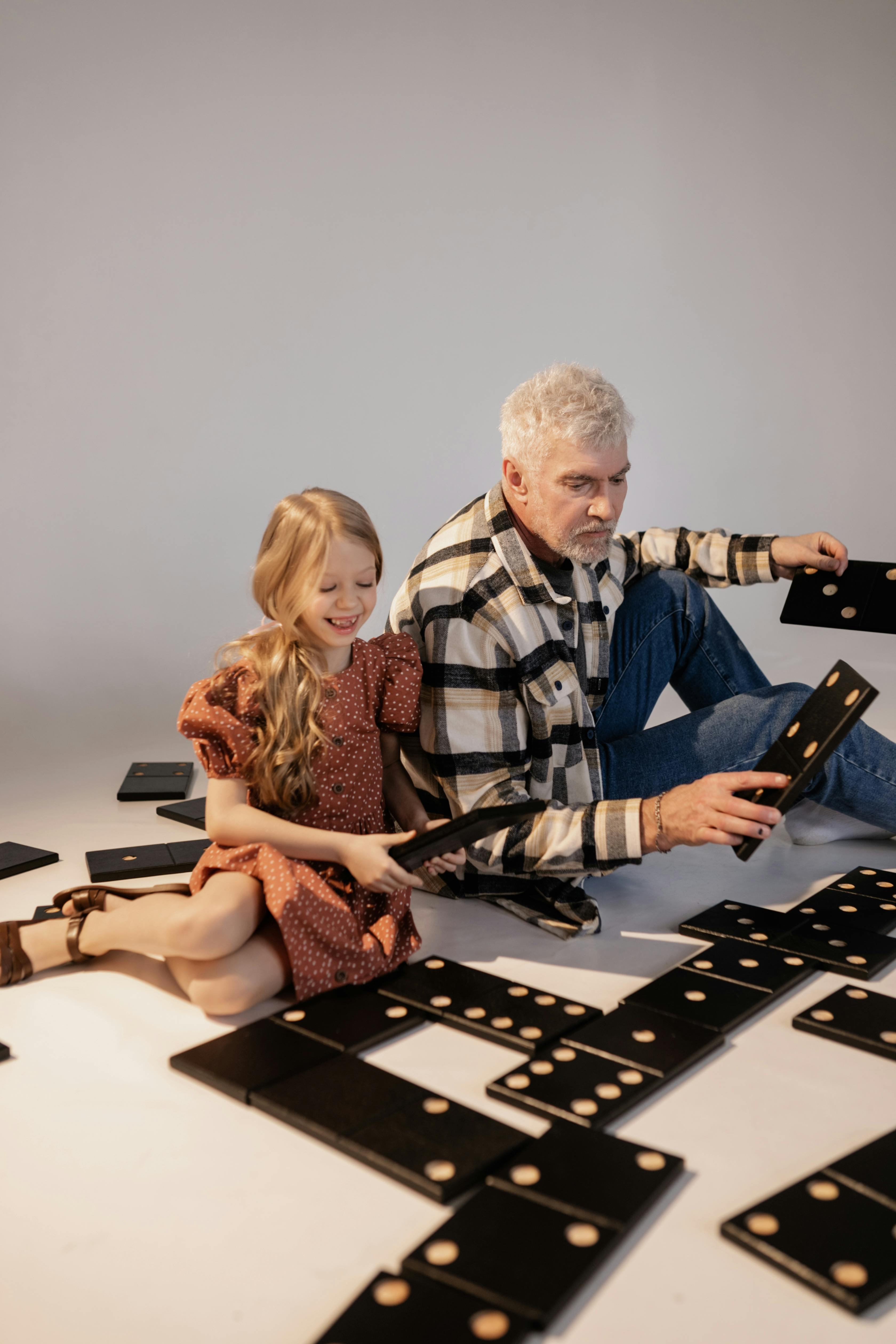
Knowing your family history can help reduce anxiety by giving you context, continuity, and a stronger sense of identity. A family tree becomes most powerful when it connects names and dates with stories, values, memories, and relationships.
Anxiety about the unknown is one of the most common emotional experiences of modern life. It can appear as worry about the future, uncertainty about identity, or a deeper fear of not knowing where you belong.
One surprisingly practical way to soften this uncertainty is to look backward. When you understand where you come from, what values shaped your family, and what challenges previous generations faced, uncertainty can begin to feel less like emptiness and more like a larger story you are part of.
A family tree is not just a genealogy project. Used thoughtfully, it can become a tool for reflection, emotional grounding, and intergenerational connection.
Anxiety about the unknown
Fear of the unknown is a deeply human response. It is not irrational. The brain naturally tries to anticipate risks, and uncertainty can keep the mind in a state of alertness.
This can appear in everyday worries about health, work, relationships, or money. But there is also a deeper form of existential anxiety that touches more basic questions:
These questions are different from practical problems. They do not always have simple solutions. They concern identity, belonging, and meaning.
When people feel disconnected from their roots, these questions can become sharper. Without a sense of continuity, the future may feel more uncertain and the self may feel less stable.
Why context reduces fear
Uncertainty creates tension. When the mind does not know what to expect, it remains prepared for many possible outcomes at once. That can be emotionally exhausting.
Family history offers context. It shows that you are not starting from nowhere. You come from people who faced uncertainty before you, adapted in their own ways, and passed something forward.
When you know that previous generations survived hardship, migrated, rebuilt, cared for others, or endured loss, the unknown can feel less isolating.
This does not mean their stories solve your problems. It means they give you a wider frame. They remind you that uncertainty is not a personal failure. It is part of human life, and your family has already lived through its own versions of it.
The psychological power of family history
Knowledge of family history has been linked to stronger identity, better emotional resilience, and a greater sense of meaning. This is especially visible in research involving adolescents and young adults, but the underlying logic applies across life stages.
People who know more about their family’s past often have a clearer sense of where they come from. They may also feel more connected to something larger than their immediate circumstances.
Family stories are especially powerful when they include both strengths and struggles. A family history made only of achievements can feel distant or unrealistic. Stories of difficulty, recovery, persistence, and adaptation are often more grounding.
What family history can give you
When you know the stories of your parents, grandparents, and earlier generations, you gain more than information. You gain emotional reference points.
A family history can provide:
The point is not to idealize the past. The point is to understand it well enough that it becomes a source of perspective rather than a blank space.
Why stories matter more than facts alone
A family tree with names and dates can be useful, but it is rarely enough on its own.
There is a difference between knowing that a grandmother was born in 1935 and knowing that she grew up during hardship, moved to a new country, learned a new language, worked to support her family, and passed down a strong ethic of care.
The second version gives meaning. It connects a person to values, decisions, emotions, and context.
Facts are the skeleton of family history. Stories give it life.
The family tree as a map of identity
A family tree is a visual map of relationships across generations. It helps organize what might otherwise feel scattered, incomplete, or confusing.
When you build a family tree, you are doing something psychologically important: you are giving structure to complexity. Anxiety often thrives in chaos. Structure can reduce that feeling of disorientation.
A tree shows where people fit. It reveals branches, connections, gaps, repeated names, migrations, marriages, losses, and new beginnings. It turns abstract ancestry into something visible.
Past as story, not only information
The most meaningful family trees do not stop at data. They connect each person to memory.
Instead of recording only:
“Maria, born 1920, died 2005.”
A richer family tree might preserve:
“Maria was a great-grandmother who grew up in a small village, married young, raised three children, lived through wartime uncertainty, and became known in the family for her courage and practical wisdom.”
The second version gives descendants something they can use emotionally. It offers a model, a value, and a human connection.
How family trees reduce existential uncertainty
A family tree can reduce uncertainty in several ways.
Create a digital legacy that your children and grandchildren will be proud of.
Create a family legacyIt gives depth. You can see that you are not the first person in your family to face difficulty, change, or the unknown.
It gives perspective. Present struggles become part of a longer human pattern rather than isolated personal failure.
It gives models. An ancestor’s courage, creativity, loyalty, endurance, or resourcefulness can become a source of reflection.
It gives place. Instead of feeling like an isolated self in an undefined world, you can begin to feel like a person within a continuum.
A family tree does not tell you exactly who you must become. It helps you understand the influences, stories, and relationships from which you are becoming yourself.
Common reasons people avoid family history
Despite its emotional value, many people never actively collect or preserve family history. The reasons are understandable, but often mistaken.
“My family is not interesting enough”
Many people assume their family history is ordinary and therefore not worth recording.
But ordinary lives are often the most meaningful. A person does not need to be famous to matter. The ways family members worked, loved, adapted, survived, cooked, migrated, parented, failed, repaired, and remembered can all carry deep value.
For identity, the most useful family stories are often not heroic legends. They are human stories.
“It is too late”
Some people believe it is too late because parents or grandparents have died, memories have faded, or documents have been lost.
It may be harder, but it is not pointless. Photographs, letters, certificates, recipes, old objects, relatives’ memories, and partial stories can still form the beginning of a meaningful archive.
Even fragments matter. A single photograph with context is more valuable than hundreds of unidentified images.
“A social media album is enough”
Social media can preserve some images, but it rarely preserves legacy.
Photos without context are fragile. A future viewer may not know who is pictured, where the photo was taken, what was happening, or why it mattered.
A meaningful family archive needs more than storage. It needs names, dates, relationships, stories, and emotional explanation.
“I am afraid of what I might find”
Some people avoid family history because they fear painful discoveries: conflict, trauma, secrets, loss, estrangement, or shame.
This fear is understandable. Family history is not always comforting. But hidden stories can still influence families, even when no one names them.
Handled carefully, difficult history can become a source of understanding. It may help people recognize patterns, make sense of inherited pain, and choose what they want to continue or change.
How to start building a family tree that supports emotional grounding
Starting does not require a perfect plan. It requires one small step toward gathering, organizing, and contextualizing what already exists.
Gather what you already have
Begin with what is close at hand:
You do not need to have everything. Start with what is available.
Ask questions while you can
Older relatives are often the most important living archive. Their memories may explain photographs, documents, relationships, and family decisions that would otherwise remain unclear.
Questions can be simple:
These conversations do not need to feel formal. They can happen during a visit, while cooking, while looking at photos, or in short phone calls.
Write, record, and organize
Collecting is only the first step. The real value comes from adding context.
For each photo, document, or memory, try to capture:
If information remains scattered across phones, emails, folders, and people’s memories, it can easily disappear. When it is organized in one meaningful place, it becomes easier to reflect on and easier to pass on.
Create stories, not only lists
A family tree should not be only a list of names.
Instead of recording a person as a bare entry, add a short story:
“Maria was my great-grandmother. She came from a small village, married young, raised three children, and became known for protecting the family during hard times. She taught her grandchildren that courage often looks like practical care.”
This is the kind of memory that can reduce anxiety. It gives identity, value, and emotional continuity.
How MyHeirloom helps: structure instead of chaos
Family history is psychologically valuable, but many families struggle with the practical side of organizing it.
The common situation looks like this:
MyHeirloom helps by providing one structured space where family history can become organized, contextual, and meaningful.
Family Tree
MyHeirloom’s Family Tree helps users visualize relationships, generations, and family connections.
This is more than a list. It is a visual map that helps people see where they fit within a wider family structure.
Give them the home they deserve. Bring your family legacy into the digital age.
Start archivingKeepsakes
Keepsakes allow users to preserve meaningful memories with photos, videos, audio, text, dates, and context.
A photograph without context can become hard to understand. A photograph connected to a Keepsake can explain who is pictured, what happened, and why the moment matters.
Weaver
Weaver helps users reflect on memories and turn them into stories.
For people who do not know where to begin, guided prompts can make storytelling easier. Weaver can help users move from scattered recollections to structured, meaningful entries.
My Tribe
My Tribe makes space for important people in a person’s life, including family members, close friends, mentors, and other meaningful relationships.
This matters because identity is shaped not only by bloodlines, but also by care, influence, and emotional connection.
DocuVault
DocuVault helps users store important and sensitive documents in a dedicated space.
This may include identity records, health information, financial documents, family instructions, and other materials that should be preserved carefully. DocuVault does not replace legal documents such as a will or power of attorney, but it can complement responsible digital legacy planning.
Legacy Room
The Legacy Room brings these elements together.
Stories, photos, documents, family relationships, recipes, and timelines can live in one organized environment. Instead of scattered material, the family gains a structured archive with meaning.
When memories are organized with context, they become more than stored files. They become a living legacy.
Real-life examples of family history reducing anxiety
The following examples are illustrative. They show how family history can change the emotional meaning of uncertainty.
Anxiety about the future
A 32-year-old professional feels constant pressure to succeed. She worries about failure and doubts whether she can handle major setbacks.
When she begins exploring her family history, she learns that her father lost his job in midlife and rebuilt his career. Her grandmother raised children alone through a difficult period. Her great-grandmother moved to a new country with very little and created stability over time.
This does not remove the uncertainty in her own life. But it changes her perspective. She begins to see resilience and adaptation as part of her family story, not as qualities she must invent from nothing.
Anxiety about identity
A 26-year-old feels lost and unsure what direction to take. He feels different from others and worries that his creative interests mean he lacks stability.
Through family stories, he learns that his grandfather was a painter, that another relative was a musician, and that several family members lived unconventional creative lives.
He begins to see his own exploratory nature differently. It is not necessarily a defect. It may be part of a broader family pattern of creativity and independence.
Existential anxiety in midlife
A 58-year-old approaches retirement and begins asking what her life has meant and whether anyone will remember her.
As she starts writing stories and building a family tree, she realizes that her life is not an ending. It is a bridge. Her children and grandchildren will know earlier generations partly because she chooses to preserve those stories now.
This gives her a renewed sense of continuity. Her life becomes part of future memory.
From uncertainty to grounding
Anxiety about the unknown is natural, but it does not have to remain shapeless.
Knowing your family history gives you something fundamental: grounding. When you understand where you come from, how previous generations handled difficulty, and what values shaped your family, uncertainty about the future can become easier to hold.
This is not about predicting the future. It is about recognizing your capacity within a broader story.
You can begin simply. Look through family photographs. Ask an older relative one question. Scan one important document. Write one memory. Add one person to your family tree.
Over time, these small actions create something larger: a meaningful record of who your family was, what they carried, and what you may choose to carry forward.
FAQ
1. Can knowing my family history really reduce anxiety?
It can help. Family history can provide continuity, identity, and examples of resilience. Knowing the stories of previous generations may reduce feelings of isolation and give you a stronger sense that you belong to a wider human and family story.
2. When is the best time to start collecting family stories?
The best time is now. The oldest living generation is often the most valuable source of stories and context. But it is never too late. Even photos, documents, partial memories, and conversations with other relatives can become the foundation of a meaningful family archive.
3. What if my family history includes trauma or painful stories?
That is a valid concern. Difficult stories should be handled with care, privacy, and compassion. Still, understanding painful family history can sometimes help people recognize patterns, make sense of inherited emotions, and decide what they want to heal or change.
4. How can I share family stories with my children while protecting privacy?
Use a private, controlled space rather than public social media. MyHeirloom allows families to organize stories, photos, and documents in a more intentional environment, with control over what is shared and with whom.
5. Do I need to have everything complete before I start?
No. Start with what you have. A single photo with a story is valuable. A partial memory is valuable. A basic family tree can grow over time as more information is added.
6. How is MyHeirloom different from ordinary cloud storage?
Ordinary cloud storage mainly stores files. MyHeirloom is designed for legacy. It connects stories, photos, documents, family relationships, timelines, and secure document storage in one structured environment, helping families preserve meaning rather than only data.

MyHeirloom gives you a dedicated Legacy Room—a private, secure space to collect photos, videos, documents, and stories.
Start now for free