
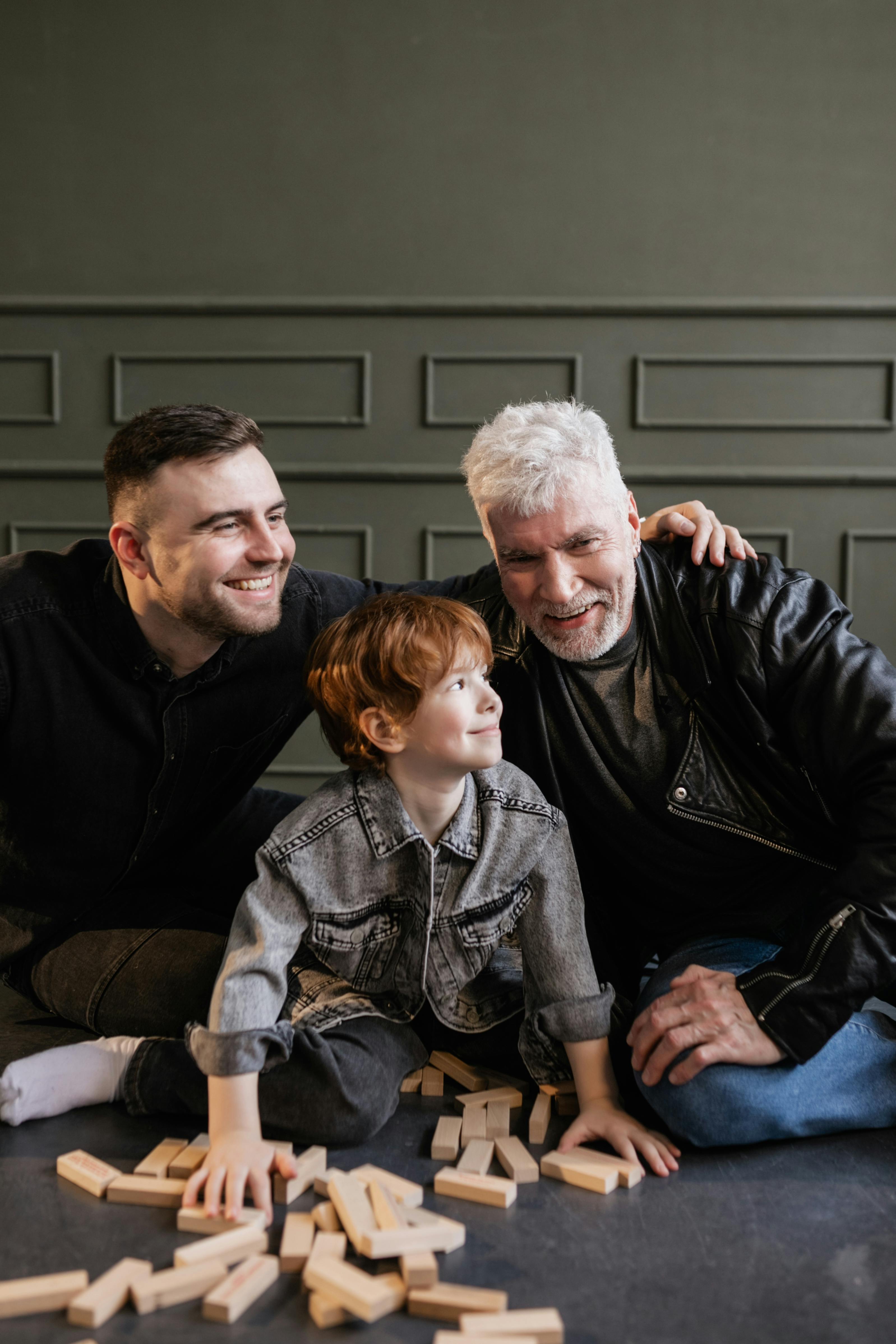
Your family tree can reveal inherited patterns in health, identity, values, resilience, and life choices. But genes are not destiny. They are a map that can help you make more informed decisions, break harmful cycles, and preserve wisdom for future generations.
Many people think of family history as a record of the past: names, dates, places, old photographs, and distant ancestors.
But your family tree can also be a guide for the present.
It can show patterns in health, personality, work, relationships, resilience, trauma, creativity, and values. It can help you understand what you may have inherited, what you may want to continue, and what you may want to change.
The key is this: family history is not a prophecy.
Genes influence your life, but they do not fully determine it. Family stories shape you, but they do not imprison you. Inherited patterns matter, but they can also be understood, interrupted, and transformed.
Your family tree is not a verdict. It is a map.
For a long time, people often spoke about genetics as if genes were fixed instructions.
If a disease “ran in the family,” it felt inevitable. If a personality trait appeared across generations, it seemed permanent. If a family repeated certain behaviors, people sometimes assumed that nothing could be done.
Modern understanding is more nuanced.
Genes can influence susceptibility, tendencies, and biological pathways. But they operate in constant interaction with environment, lifestyle, relationships, stress, nutrition, sleep, social support, and personal choices.
This means that family history matters deeply, but not because it predicts your future with certainty.
It matters because it gives you useful information.
Genetic potential is not genetic destiny
A family history of heart disease, diabetes, cancer, anxiety, depression, addiction, or dementia does not mean you will definitely experience the same outcome.
It may mean you should pay closer attention.
It may mean earlier screening, more careful prevention, healthier routines, or more proactive conversations with doctors.
A family pattern is a signal, not a sentence.
The most empowering way to read your family tree is not “this will happen to me,” but “this is information I can use.”
Epigenetics helps explain why genes are not destiny.
Epigenetics refers to changes in how genes are expressed without changing the underlying DNA sequence. Environmental factors such as nutrition, stress, physical activity, sleep, toxins, and early life experiences can influence whether certain genes are more or less active.
A useful metaphor is a dimmer switch. The wiring may exist, but the intensity can change.
This does not mean people can control everything about their biology. It also does not mean every illness can be prevented by lifestyle choices. That would be inaccurate and unfair.
But it does mean that inherited risk often interacts with lived experience.
Why this matters for family history
When you look at your family tree, you are not looking only at genes.
You are also looking at:
Family health patterns often reflect both biology and shared environment.
That is why learning family history can be so practical. It helps you identify where to be attentive and where you may have the power to make different choices.
One of the most useful applications of family history is health awareness.
Doctors often ask about family health history because relatives can share genetic predispositions, environmental exposures, and lifestyle patterns.
Family history may be especially important when:
Knowing this information can help guide conversations with healthcare providers.
Family history can reveal risk. But lifestyle can still matter enormously.
Many complex health outcomes arise from the interaction of genetic predisposition and daily habits. Smoking, diet, physical activity, sleep, stress management, alcohol use, and preventive care can all shape health trajectories.
This is why a family tree can become motivating rather than frightening.
If heart disease appears across generations, that knowledge can motivate cardiovascular screening, movement, nutrition, blood pressure monitoring, and conversations with a doctor.
If type 2 diabetes is common in the family, that knowledge can encourage attention to weight, activity, blood sugar, and food patterns.
If anxiety or depression appears in the family, that knowledge can encourage early support, emotional literacy, therapy, community, and stress-management practices.
Inherited risk is most useful when it leads to earlier awareness and better care, not fear or fatalism.
Your family tree does not only influence health. It also shapes identity.
People understand themselves through stories. Knowing where you come from can provide continuity, belonging, and emotional grounding.
Store your most cherished memories and heritage safely on Heirloom.
Preserve our memoriesFamily stories help answer questions such as:
This matters because identity is not built from isolated facts. It is built from meaning.
Family stories build resilience
Stories of hardship and recovery can be psychologically powerful.
When younger generations hear how parents, grandparents, or ancestors faced difficulty, they may feel less alone in their own challenges.
A story about migration can become a lesson in courage. A story about rebuilding after loss can become a model of adaptation. A story about education, work, caregiving, or faith can become a source of values.
The benefit is not that ancestors were perfect. They were not.
The benefit is that their lives provide examples of human complexity, endurance, mistakes, repair, and growth.
Belonging beyond biology
Family history is not limited to biological relatives.
Many people are shaped by adoptive parents, stepparents, mentors, friends, caregivers, chosen family, and community elders.
A meaningful family tree or legacy archive should make room for the people who shaped your life, not only the people who share your DNA.
This is why tools like My Tribe can be so valuable: they recognize that identity is shaped by care, influence, and relationship as well as genetics.
Family history can also influence work and vocation.
Some families pass down occupational traditions: medicine, teaching, law, business, farming, craft, military service, public service, art, entrepreneurship, or caregiving.
These patterns may arise through mentorship, family networks, shared values, economic necessity, or personality traits.
Learning about family work history can help you understand your own assumptions about career.
Maybe your family valued stability because earlier generations experienced scarcity. Maybe entrepreneurship runs through several branches. Maybe creative work was discouraged but quietly present. Maybe caregiving was central to family identity.
This does not mean you must follow the same path.
It means you can choose more consciously.
Questions to ask about work and values
Family history can help you separate inherited expectations from authentic choices.
Family trees can reveal painful patterns too.
War, migration, poverty, displacement, discrimination, abuse, addiction, illness, grief, and family silence can echo across generations.
These patterns may affect parenting, trust, emotional expression, conflict, attachment, and stress responses.
Understanding this history can be difficult. But it can also be liberating.
Naming an inherited pattern is often the first step toward changing it.
Trauma is not the whole story
A family history of trauma should not be reduced only to damage.
Where there is trauma, there may also be survival. Where there was silence, there may also have been protection. Where there was fear, there may also have been courage, adaptation, and care.
The goal is not to excuse harmful patterns. The goal is to understand them well enough to choose differently.
A person who recognizes a family pattern of emotional avoidance can learn new communication skills. A person who recognizes a family pattern of addiction can seek support early. A person who recognizes inherited anxiety can develop healthier coping strategies before crisis arrives.
Family history becomes empowering when it helps transform unconscious repetition into conscious choice.
Your family tree can help you live more intentionally when you treat it as a map.
A map does not force you down one road. It shows terrain: mountains, rivers, old routes, risk areas, and possible paths.
Family history can show:
Repeated health conditions
Mental health patterns
Career traditions
Relationship patterns
Stories of resilience
Creative or spiritual traditions
Trauma or silence
The map is valuable because it gives orientation. But you still decide how to travel.
Understanding your family tree is easier when stories, documents, memories, health information, and relationships are organized in one meaningful place.
MyHeirloom helps families preserve more than names and dates. It helps capture the context that makes family history useful.
Family Tree
Create a digital legacy that your children and grandchildren will be proud of.
Create a family legacyThe Family Tree helps visualize relationships across generations.
This makes it easier to see patterns, gaps, branches, and connections. A visual tree can turn abstract family history into something concrete and navigable.
My Tribe
My Tribe allows users to include important non-biological relationships, such as mentors, close friends, caregivers, and chosen family.
This reflects how people are actually shaped: not only by genetics, but by meaningful human connection.
Keepsakes
Keepsakes help preserve stories, photographs, audio, video, and written memories.
A family health story, a career lesson, a migration memory, or a value passed down from a grandparent can be preserved with context rather than left as a fading anecdote.
Life Timeline
The Life Timeline organizes dated memories and events chronologically.
This can help families see how individual lives unfolded across time: births, moves, crises, achievements, losses, career shifts, and turning points.
DocuVault
DocuVault provides a secure space for important documents and instructions.
This can include health summaries, family records, legal documents, letters, and other sensitive materials that should be preserved carefully.
DocuVault is not a substitute for professional medical, legal, or financial advice, but it can support responsible organization and family continuity.
Weaver
Weaver helps users turn memories into stories through guided prompts.
This is especially useful for people who know their family history matters but feel unsure where to begin.
A few guided questions can help preserve the wisdom, choices, and lessons that make family history meaningful.
Start with living relatives whenever possible.
You do not need to ask everything at once. Begin with one conversation.
Useful questions include:
Record answers with permission. Add names, dates, places, and context.
Mistake 1: treating risk as certainty
A family pattern increases awareness. It does not guarantee your future.
Mistake 2: ignoring family history entirely
Avoiding difficult information may feel easier, but it can prevent useful prevention, healing, and understanding.
Mistake 3: focusing only on biology
Chosen family, caregiving relationships, culture, and environment also shape identity and outcomes.
Mistake 4: collecting facts without stories
Names and dates matter, but stories explain why those facts matter.
Mistake 5: preserving everything without structure
A pile of documents and photos can become overwhelming. Organization, captions, and context turn material into legacy.
Genes are not destiny. Family history is not a prison. Your family tree is a map.
It can show inherited health risks, emotional patterns, values, career traditions, trauma, resilience, and sources of identity. But it does not tell you that your path is fixed.
Instead, it gives you information.
With that information, you can make better health decisions, ask better questions, seek support earlier, preserve meaningful stories, and choose which patterns to continue or transform.
Your ancestors’ lives matter not because they determine you, but because they orient you.
By understanding your family tree, you can live with more awareness, more compassion, and more agency.
And by preserving what you learn in a structured legacy space like MyHeirloom, you can give future generations the same gift: not a fixed destiny, but a richer map for living.
1. If my family has a history of a particular disease, does that mean I will develop it?
No. Family history may increase statistical risk, but it does not guarantee an outcome. It should be used as information for prevention, screening, and discussion with healthcare professionals.
2. Can epigenetic changes from family experiences affect future generations?
Epigenetic changes can influence how genes are expressed, and research continues to explore how some patterns may be transmitted across generations. In humans, this area is complex and still developing. What is clear is that environment, stress, nutrition, sleep, and lifestyle can influence gene expression during a person’s life.
3. How far back should I research family health history?
For practical medical conversations, three generations are often most useful: grandparents, parents, siblings, children, aunts, uncles, and sometimes cousins. More distant history may also matter for rare inherited conditions or ancestry-specific risks.
4. Does family history of mental health conditions mean I will have the same condition?
No. It may increase awareness of risk, but it does not determine your future. Knowing the pattern can help you recognize symptoms earlier, seek support, and develop healthier coping strategies.
5. Can understanding family history change my behavior?
Yes. Family history can increase self-awareness and help people make more intentional choices about health, relationships, work, parenting, and emotional patterns.
6. What is the difference between genealogy and family stories?
Genealogy records names, dates, places, and relationships. Family stories explain meaning: what people experienced, what they valued, how they handled hardship, and what they hoped to pass on. Both are important, but stories often carry the deepest emotional value.

MyHeirloom gives you a dedicated Legacy Room—a private, secure space to collect photos, videos, documents, and stories.
Start now for free