
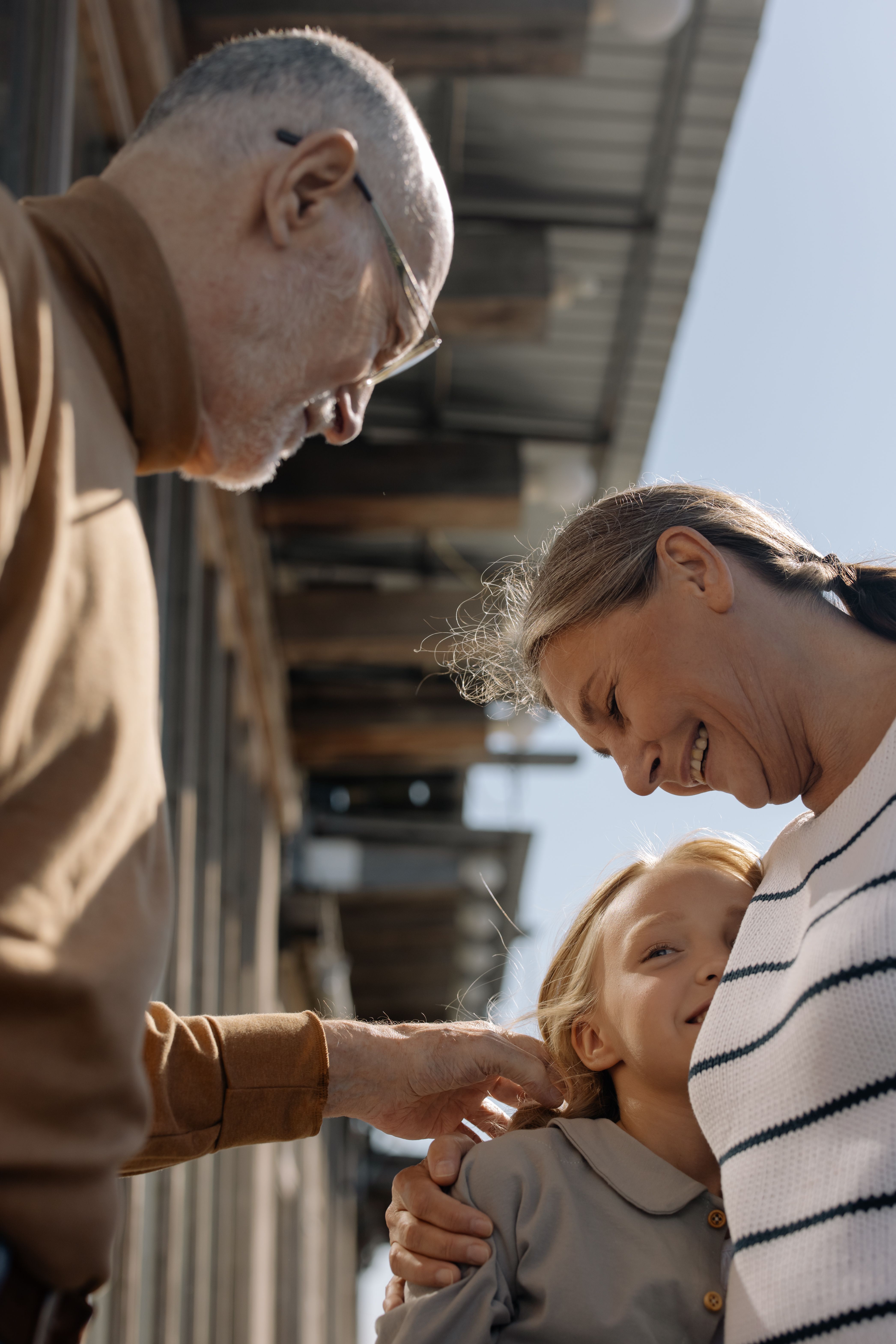
Your family history can reveal patterns of talent, temperament, resilience, values, and opportunity that shaped previous generations and may still influence you today. Genes are not destiny, but when combined with family stories and preserved context, they can become a powerful map for self-understanding and growth.
Have you ever wondered why certain abilities feel natural to you?
Maybe you have always been drawn to music, numbers, writing, sport, teaching, design, caregiving, or building things with your hands. Maybe a talent appeared in you before you had words for it. Or maybe you only began to understand it after discovering that your grandfather was an engineer, your great-grandmother was a gifted storyteller, or several relatives were musicians, teachers, athletes, or craftspeople.
Family history can reveal these patterns.
Your ancestors did not pass down only genes. They also passed down environments, values, habits, coping strategies, traditions, stories, and expectations. Together, these influences shape what you notice, what feels possible, and what talents you may choose to develop.
The question of whether talent is inherited or developed has fascinated people for generations.
The best answer is: both.
Genes can influence aptitude, temperament, physical traits, cognitive tendencies, and personality. But talent does not appear fully formed. It develops through environment, practice, encouragement, opportunity, and personal motivation.
A child may inherit musical sensitivity, but without music in the home or access to training, that sensitivity may never fully develop. Another child may inherit athletic potential, but without support and discipline, the potential may remain hidden.
Genetic inheritance creates possibility. Environment and effort shape whether that possibility becomes skill.
Heritability is not destiny
When researchers discuss heritability, they are describing patterns across populations. A heritability estimate does not mean that a specific percentage of your personal talent is fixed by genes.
It means that genetic differences help explain some variation between people in a particular population and context.
This distinction matters.
A high genetic contribution to a trait does not mean your future is predetermined. It means that inherited tendencies may influence what comes more easily, what feels rewarding, or what abilities are easier to develop with practice.
The practical takeaway is empowering: your family tree can help you identify potential, not limit your path.
Family patterns can appear in many domains. These patterns should be interpreted carefully, but they can provide useful clues.
Mathematical and analytical ability
Some families show repeated strengths in mathematics, engineering, architecture, accounting, programming, science, chess, mechanics, or technical problem-solving.
These patterns may reflect genetic tendencies toward spatial reasoning, working memory, logical thinking, or persistence. They may also reflect family culture: books in the home, conversations about systems, encouragement toward technical careers, or early exposure to problem-solving.
Musical and artistic ability
Musical ability may involve pitch perception, rhythm, memory, emotional expression, and motor coordination.
Artistic ability may involve visual perception, imagination, sensitivity to form, and repeated exposure to creative practice.
A family with singers, instrumentalists, dancers, painters, designers, writers, or makers may carry both inherited predispositions and a culture that gives creative expression permission to grow.
Athletic performance
Athletic talent is influenced by body type, coordination, muscle composition, endurance, speed, reaction time, discipline, and training response.
A family line of runners, dancers, swimmers, wrestlers, manual workers, or physically skilled people may reveal patterns in physical ability. But sport also depends heavily on environment: access to coaching, facilities, nutrition, recovery, and motivation.
Writing, teaching, and communication
Some people inherit or develop a gift for language, storytelling, teaching, persuasion, or emotional expression.
If your family includes teachers, lawyers, clergy, writers, translators, performers, community leaders, or relatives known for vivid storytelling, you may be seeing a pattern of verbal and interpersonal strength.
Practical intelligence and craft
Not every talent appears on a stage or résumé.
Families often pass down practical intelligence: cooking, sewing, farming, repairing, woodworking, organizing, gardening, caregiving, or solving everyday problems.
These abilities are often treated as ordinary, but they are deeply valuable. Preserving them helps future generations understand the real skills that sustained the family.
Genes may influence ability, but environment often determines whether ability is noticed and developed.
A family’s environment includes:
This is why talent often clusters in families.
A family of musicians may pass down musical sensitivity, but also instruments, songs, routines, and encouragement. A family of teachers may pass down verbal ability, but also habits of explanation, reading, and debate.
Family talent is rarely just biological. It is biological, emotional, cultural, and practical at the same time.
Create a digital legacy that your children and grandchildren will be proud of.
Create a family legacyFamily inheritance does not involve only specific talents. It can also include temperament.
Some people inherit tendencies toward conscientiousness, curiosity, sociability, caution, sensitivity, persistence, or emotional intensity. These traits can influence how talents develop.
A highly conscientious person may practice consistently. A curious person may explore many subjects. A socially confident person may thrive in performance or leadership. A sensitive person may notice emotional nuance and become a strong artist, caregiver, or communicator.
Understanding family temperament patterns can help you work with your nature rather than against it.
Inherited tendencies can be shaped
A tendency is not a rule.
A person from a family of anxious people can develop healthy coping tools. A person from a conflict-avoidant family can learn direct communication. A person with inherited impulsivity can build structure and self-regulation.
Family history helps you see patterns early enough to respond consciously.
Families pass down more than genes.
They pass down patterns of behavior, emotional response, and meaning. These may include:
Some patterns are strengths. Others may have begun as survival strategies but no longer serve the family well.
For example, a family that avoids conflict may have developed that habit because earlier generations lived through danger or instability. A family that hoards resources may be carrying the memory of scarcity. A family that values achievement above rest may be responding to past insecurity.
Understanding a pattern does not excuse harm. But it can replace shame with context and make change more possible.
Learning about inherited patterns does not mean rejecting your family.
It means choosing consciously.
You can honor the resilience of ancestors while deciding not to repeat their emotional silence. You can respect a family’s work ethic while learning to rest. You can preserve ambition while softening perfectionism. You can carry courage forward while leaving fear behind.
Family history becomes powerful when it gives you agency.
It allows you to ask:
Family stories are not decorative. They shape identity.
People who know more about their family history often gain a stronger sense of belonging and continuity. Stories of resilience can help younger generations understand that hardship is part of life, but not the end of the story.
A child who hears how a grandparent rebuilt after loss may internalize resilience. A young adult who learns about an ancestor’s courage may feel less alone in their own uncertainty. An older adult who records their story may experience a renewed sense of purpose.
The story matters because it gives meaning to the pattern.
Daily details are worth preserving
Family history is not only about dramatic events.
Future generations may want to know:
These details may feel ordinary now. Later, they become priceless.
Family discoveries often become scattered.
A photo is on one phone. A voice recording is in another app. A family document is in a drawer. A recipe is in a notebook. A story lives only in someone’s memory.
MyHeirloom helps bring these fragments together in one structured Legacy Room.
Legacy Room
The Legacy Room is a dedicated space for preserving stories, photos, documents, memories, and life milestones.
Instead of treating family history as random storage, it creates a meaningful environment where materials can be organized with context.
Keepsakes
Keepsakes allow users to preserve photos, videos, audio recordings, text, and memories together.
A photograph of a grandfather’s workshop can become a Keepsake that explains what he built, what he taught, and how his skill shaped the family.
Weaver
Weaver helps users reflect on their memories and relationships through guided prompts.
This is useful for preserving not only facts, but meaning: why a talent mattered, how a family pattern developed, what lesson should be passed forward.
Family Tree
The Family Tree helps visualize relationships across generations.
It can also help identify repeated patterns of work, ability, values, or inherited strengths.
My Tribe
My Tribe makes room for important people beyond biological relatives: mentors, caregivers, teachers, close friends, and chosen family.
This matters because talents are shaped not only by genes, but also by people who encourage and guide us.
Family Cookbook
The Family Cookbook preserves recipes with stories.
Store your most cherished memories and heritage safely on Heirloom.
Preserve our memoriesA family recipe is often more than food. It can represent cultural heritage, survival, love, celebration, migration, or skill passed down through generations.
DocuVault
DocuVault provides a secure space for important documents and sensitive information.
This may include family health records, genetic reports, legal documents, and instructions. Sensitive genetic or health-related information should always be handled carefully, with privacy controls and appropriate professional guidance where needed.
Once you notice family patterns, use them thoughtfully.
If your family includes writers, teachers, or communicators, you might explore writing, teaching, public speaking, or mediation.
If your family includes athletes or dancers, you might pay attention to how your body responds to movement and training.
If your family includes builders, engineers, or craftspeople, you might explore design, mechanics, architecture, or practical problem-solving.
If your family includes caregivers, community leaders, or healers, you might recognize empathy and service as inherited strengths.
But do not treat patterns as obligations.
The goal is not to copy your ancestors. The goal is to understand the map and choose your own route.
Start with what you already have.
Ask older relatives about talents, occupations, hobbies, and family traits. Look through old photographs and ask what people were known for. Preserve stories behind heirlooms, recipes, tools, instruments, uniforms, certificates, and letters.
Useful questions include:
Record answers with permission. Add context. Store them somewhere structured and secure.
Mistake 1: thinking talent is fixed
Talent grows. Genetic predisposition may help, but practice and environment matter.
Mistake 2: ignoring ordinary skills
Cooking, repairing, caregiving, organizing, teaching, and storytelling are real talents.
Mistake 3: preserving photos without explanations
Future generations need names, dates, places, and stories.
Mistake 4: waiting too long
The best time to ask older relatives is while they can still share their memories.
Mistake 5: treating inherited patterns as fate
Family patterns are information. You still have agency.
Your family’s DNA may hold clues to your talents, temperament, and tendencies. But DNA is only part of the story.
Your ancestors also passed down environments, values, survival strategies, cultural traditions, emotional patterns, and stories. Together, these influences create a map of possibility.
That map can help you recognize hidden talents, understand inherited strengths, and make more conscious choices about what you want to develop.
It can also help you decide which patterns to preserve and which to transform.
The most meaningful way to honor this inheritance is to preserve it with context. Not just names and dates, but stories, voices, recipes, documents, photographs, and lessons.
MyHeirloom helps families turn scattered memories into a structured Legacy Room where inherited strengths can be understood, shared, and passed forward.
Your family story deserves more than random storage. It deserves a dedicated space where future generations can discover not only who came before them, but what strengths they may carry within themselves.
1. If my family has a history of certain talents, will I definitely develop them?
No. Family history may suggest predisposition or exposure, but talent still depends on practice, motivation, support, and opportunity. Family patterns reveal possibility, not certainty.
2. How can I discover family patterns if I do not know much about my ancestors?
Start with living relatives. Ask about occupations, hobbies, skills, stories, and values. Then look at photographs, records, letters, recipes, and online genealogy databases. Even partial information can reveal meaningful patterns.
3. Should I push my children toward talents that run in the family?
No. It is better to create opportunities and observe what genuinely interests them. Children thrive when support follows curiosity rather than pressure.
4. How do I balance honoring family history with creating my own path?
Use family history as context, not a script. You can draw strength from inherited patterns while still choosing a different direction.
5. Why does it matter to preserve family stories if I can remember them now?
Memory fades, and details can disappear. Written, recorded, and organized stories allow future generations to understand not only the facts, but the meaning behind them.
6. Can I preserve my family legacy even if I know little about earlier generations?
Yes. Start with your own life. Record your values, stories, voice, daily details, lessons, and memories. Your story will become part of the family inheritance for those who come after you.

MyHeirloom gives you a dedicated Legacy Room—a private, secure space to collect photos, videos, documents, and stories.
Start now for free