
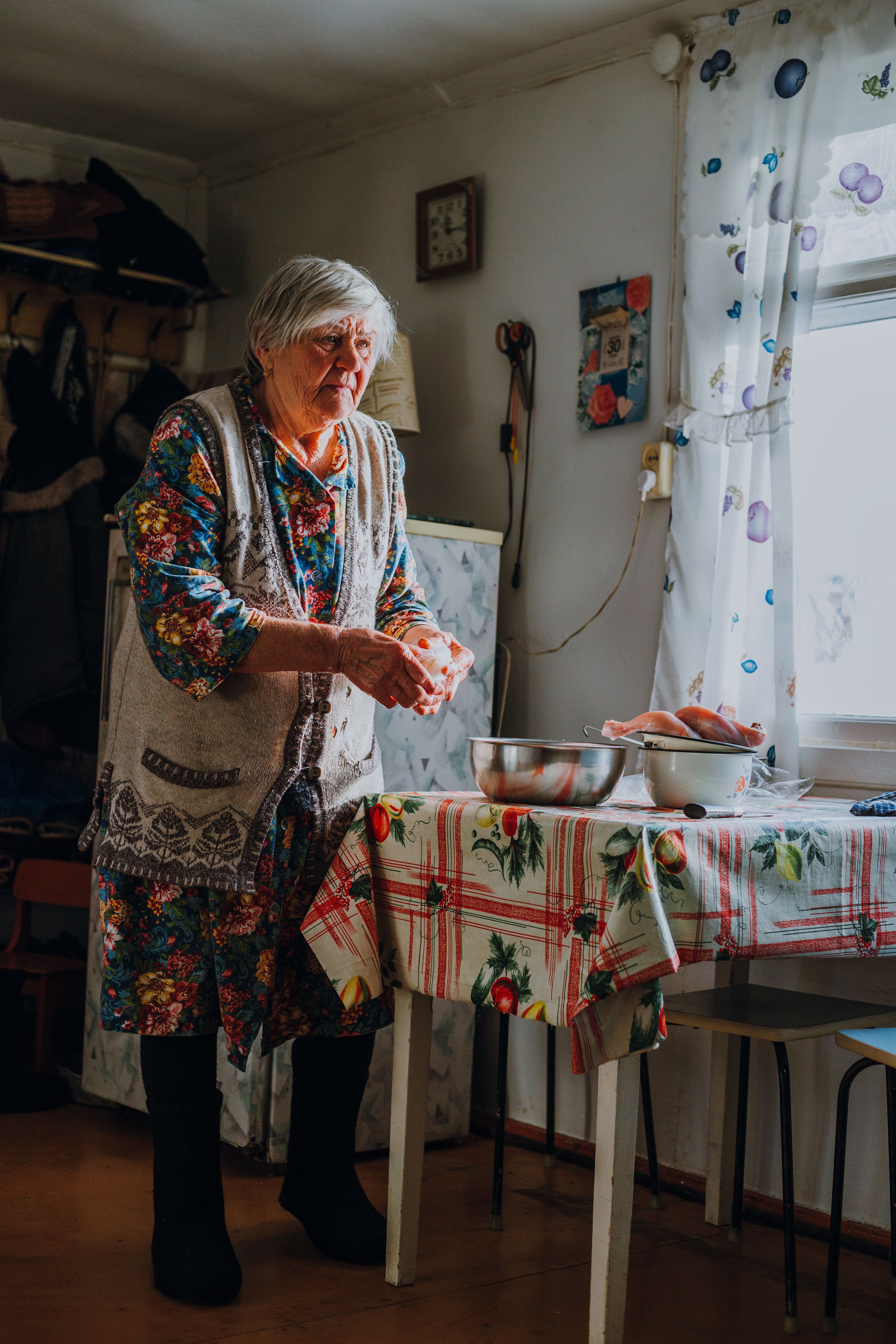
Grandmothers often serve as emotional anchors, storytellers, tradition keepers, and guardians of family memory. By preserving their stories, recipes, rituals, values, and life lessons, families can strengthen identity, belonging, and resilience across generations.
In many families, grandmothers hold a special place.
They remember who liked which meal, who struggled quietly, which story belongs to which photo, why a certain holiday tradition matters, and what really happened behind the official version of family history.
They often carry the emotional memory of the family.
Not every grandmother plays this role, and not every family relationship is simple. But when a grandmother, or grandmother-like figure, becomes a trusted storyteller and emotional anchor, her influence can shape how younger generations understand themselves, regulate emotions, and feel connected to something larger than the present moment.
A grandmother’s legacy is not only sentimental. It can be psychological, cultural, spiritual, and practical.
Many families have one person around whom others naturally gather.
Often, that person is a grandmother.
She may be the one who notices when someone is struggling, remembers the emotional details others miss, keeps family rituals alive, and quietly helps people feel safe.
This kind of presence matters because emotional security is built through repeated experiences of being seen, remembered, and accepted.
A grandmother’s love can become a kind of emotional home: a place where family members feel known without needing to perform.
The power of “clear love”
Grandmothers often provide a form of love that differs from parental love.
Parents are usually responsible for discipline, rules, schedules, school, money, and daily logistics. Grandmothers may be able to offer support with fewer immediate pressures.
This can create what many families experience as unconditional acceptance.
A child may feel free to speak to a grandmother about fears, mistakes, sadness, dreams, or questions that feel harder to discuss with parents.
That does not mean grandmothers replace parents. It means they can provide another stable relationship in the child’s emotional world.
Family stories help children and adults understand who they are.
When younger generations know what their parents, grandparents, and ancestors experienced, they gain a broader sense of identity. They learn that their family has faced hardship, made mistakes, adapted, loved, survived, and continued.
This matters because personal identity is built through narrative.
We understand ourselves through stories: where we come from, what shaped us, what our family values, and how we belong.
Grandmothers often become the keepers of those stories.
Stories create resilience
A story about a grandmother surviving poverty, migration, grief, illness, discrimination, or family rupture can become more than memory.
It can become a model of resilience.
A grandchild facing difficulty may think:
The most powerful family stories are not always happy. Stories that include difficulty and recovery often feel more real and useful.
A family story can hold both pain and strength. That is what makes it emotionally protective.
Stories help children understand emotions
Grandmothers often tell stories with emotional detail.
They may explain not only what happened, but how people felt, what choices they faced, and why certain decisions mattered.
This helps younger family members develop empathy and perspective-taking.
Instead of seeing relatives as flat figures in old photographs, children begin to understand them as full people with fears, hopes, conflicts, regrets, and courage.
That understanding can strengthen emotional intelligence and attachment.
Family identity is not only built from surnames and ancestry charts. It is built from repeated stories, shared rituals, cultural practices, recipes, songs, beliefs, and values.
Grandmothers often preserve these intangible forms of heritage.
They may remember:
These details may not appear in official records. But they are often what future generations most want to know.
Women and intangible heritage
Across many cultures, women have historically played a central role in preserving family and cultural memory.
This work is often quiet and underrecognized. It may happen through cooking, caregiving, storytelling, maintaining rituals, remembering birthdays, organizing gatherings, or explaining family history.
Yet this work is profound.
It preserves identity.
Store your most cherished memories and heritage safely on Heirloom.
Preserve our memoriesA recipe, for example, is not only food. It may carry migration history, survival, celebration, grief, care, and belonging.
A holiday tradition may carry faith, cultural continuity, or the memory of earlier generations.
A family saying may carry wisdom that has survived for decades.
Family stories are fragile.
Without deliberate preservation, stories often fade within a few generations.
The first generation lives the experience. The second generation hears the story directly. The third generation may receive only fragments, if anything at all.
Details disappear first. Then context. Then emotional meaning.
A great-grandchild may inherit a photograph but not know who is in it. A family may keep a recipe but not know why it mattered. A story may be mentioned once and then vanish.
The tragedy is not only that information is lost. It is that meaning is lost.
Storage is not the same as preservation
Many families technically “store” memories.
Photos sit on phones. Videos are saved in cloud folders. Letters remain in boxes. Recipes are tucked into drawers. Audio recordings may be hidden somewhere in old devices.
But storing is not the same as preserving.
Preservation requires context:
Without context, even well-stored materials can become emotionally unreadable.
Traditions do not need to be elaborate to matter.
A grandmother’s Sunday breakfast, birthday phone call, handwritten cards, holiday soup, garden walk, prayer, or repeated phrase can become part of the family’s emotional structure.
These quiet rituals create predictability and belonging.
They tell younger generations: this is what our family returns to.
Why quiet traditions last
The strongest traditions are often ordinary.
They happen regularly. They feel natural. They do not announce themselves as lessons.
A child may not realize that helping a grandmother prepare a recipe is also learning patience, care, family history, and cultural continuity.
A teenager may not realize that regular conversations with a grandmother are teaching emotional trust and perspective.
Only later do these moments become recognizable as legacy.
Not every family legacy is simple or comforting.
Grandmothers may carry stories of trauma, silence, grief, estrangement, discrimination, poverty, or conflict. Some family histories include painful truths that are hard to tell and harder to hear.
Preserving emotional legacy does not mean pretending everything was good.
It means telling the truth with care.
Narrative agility
Families need the ability to hold complexity.
A healthy family story can say:
This kind of storytelling can help younger generations understand difficult patterns without feeling trapped by them.
Some stories may need privacy, timing, boundaries, or therapeutic support. Not everything must be shared with everyone in the same way.
But silence is not always protection. Sometimes silence allows pain to travel forward unnamed.
Grandchildren benefit from grandmothers, but grandmothers benefit too.
When older adults share stories, they often experience renewed purpose. Their lives are not just remembered internally; they become meaningful to others.
Storytelling can reduce isolation, affirm identity, and help older adults feel that their experiences still matter.
For younger people, listening to grandparents can reduce stereotypes about aging. It helps them see older relatives not only as “old,” but as people who were once children, teenagers, lovers, workers, dreamers, and survivors.
Intergenerational storytelling humanizes everyone involved.
MyHeirloom is designed to help families preserve more than files.
It helps turn scattered memories, photos, documents, recipes, and stories into a structured Legacy Room where future generations can understand the meaning behind what is saved.
Legacy Room
The Legacy Room is the central space where a grandmother’s stories, photos, videos, documents, recipes, and memories can live together.
Instead of leaving family history scattered across phones, albums, cloud folders, and old boxes, families can create one organized place for what matters.
Keepsakes
Keepsakes allow families to preserve individual memories with photos, video, audio, text, dates, and context.
A Keepsake might include:
This turns a memory into something future generations can revisit.
Family Cookbook
A grandmother’s recipes often carry deep emotional and cultural meaning.
Create a digital legacy that your children and grandchildren will be proud of.
Create a family legacyThe Family Cookbook can preserve not only ingredients and instructions, but also the story behind the dish: who made it, when it was served, what tradition it belonged to, and why it mattered.
Family Tree and My Tribe
The Family Tree helps connect a grandmother’s stories to generations before and after her.
My Tribe can include important non-biological relationships too: caregivers, mentors, chosen family, close friends, and people who shaped the family emotionally.
This matters because emotional legacy is not always limited to biological lineage.
DocuVault
DocuVault provides a protected space for important documents and sensitive information.
This may include letters, family records, personal instructions, legal papers, health information, or materials that should be preserved carefully and privately.
Weaver
Weaver helps turn memories into stories through guided prompts.
For families who do not know where to begin, Weaver can help ask the right questions:
Start small.
You do not need to document everything at once.
Record one conversation
Ask your grandmother, or a grandmother-like figure, about one meaningful memory.
Good questions include:
Record audio or video with permission.
Label ten photos
Choose ten old family photos and add:
Preserve one recipe
Ask for the ingredients, but also ask for the story.
Who taught her? When did she make it? What memories does it carry? What changed over time?
Write one character portrait
Describe your grandmother as a person.
Not only dates and facts, but qualities:
Create one Keepsake
Use one photo, one story, one recording, or one recipe as the first piece of a larger family legacy.
You can start for free with MyHeirloom and build gradually.
Grandmothers often serve as guardians of emotional legacy.
They preserve stories, rituals, recipes, values, memories, and emotional patterns that help families understand who they are.
Their influence can shape identity, resilience, attachment, cultural belonging, and psychological wellbeing across generations.
But this legacy is fragile.
Without intentional preservation, stories fade. Recipes lose meaning. Photos become anonymous. Traditions weaken. The emotional wisdom of a grandmother’s life may disappear within only a few generations.
The solution is not complicated. Listen. Ask questions. Record stories. Add context. Preserve recipes. Label photos. Organize documents. Share memories.
MyHeirloom helps families do this in one structured Legacy Room, where a grandmother’s emotional legacy can be preserved not as scattered files, but as a living family story.
A grandmother’s love may begin in ordinary moments. But when preserved with care, it can become a source of belonging, resilience, and guidance for generations.
1. How long do family stories survive without deliberate preservation?
Without recording or intentional transmission, family stories often fade significantly within a few generations. The first generation lives the story, the second hears it directly, and the third may receive only fragments. Recording stories helps preserve detail, voice, and emotional meaning.
2. Does distance prevent grandchildren from benefiting from grandparent relationships?
Not necessarily. In-person contact is valuable, but emotional quality matters. Regular calls, recorded stories, shared photos, digital Keepsakes, and intentional visits can help preserve meaningful connection across distance.
3. Why are grandmothers often the keepers of family stories?
In many families and cultures, women have historically carried much of the emotional and relational work of family life. Grandmothers often preserve recipes, rituals, memories, and values because they have been central to caregiving and family continuity.
4. What is the best way to preserve a grandmother’s legacy?
Start with one story, one photo, one recipe, or one recording. Add context: who, when, where, why it mattered, and what future generations should understand. Over time, these small pieces can become a meaningful family archive.
5. Can chosen family or non-biological grandparents have the same impact?
Yes. A consistent, loving, emotionally available older adult can shape identity and resilience even without a biological relationship. Emotional legacy is created through care, presence, and memory, not DNA alone.
6. How should families handle painful or complicated grandmother stories?
With care, privacy, and context. Difficult stories do not need to be erased, but they should be told thoughtfully. The goal is honest meaning-making, not shame or forced positivity.

MyHeirloom gives you a dedicated Legacy Room—a private, secure space to collect photos, videos, documents, and stories.
Start now for free