
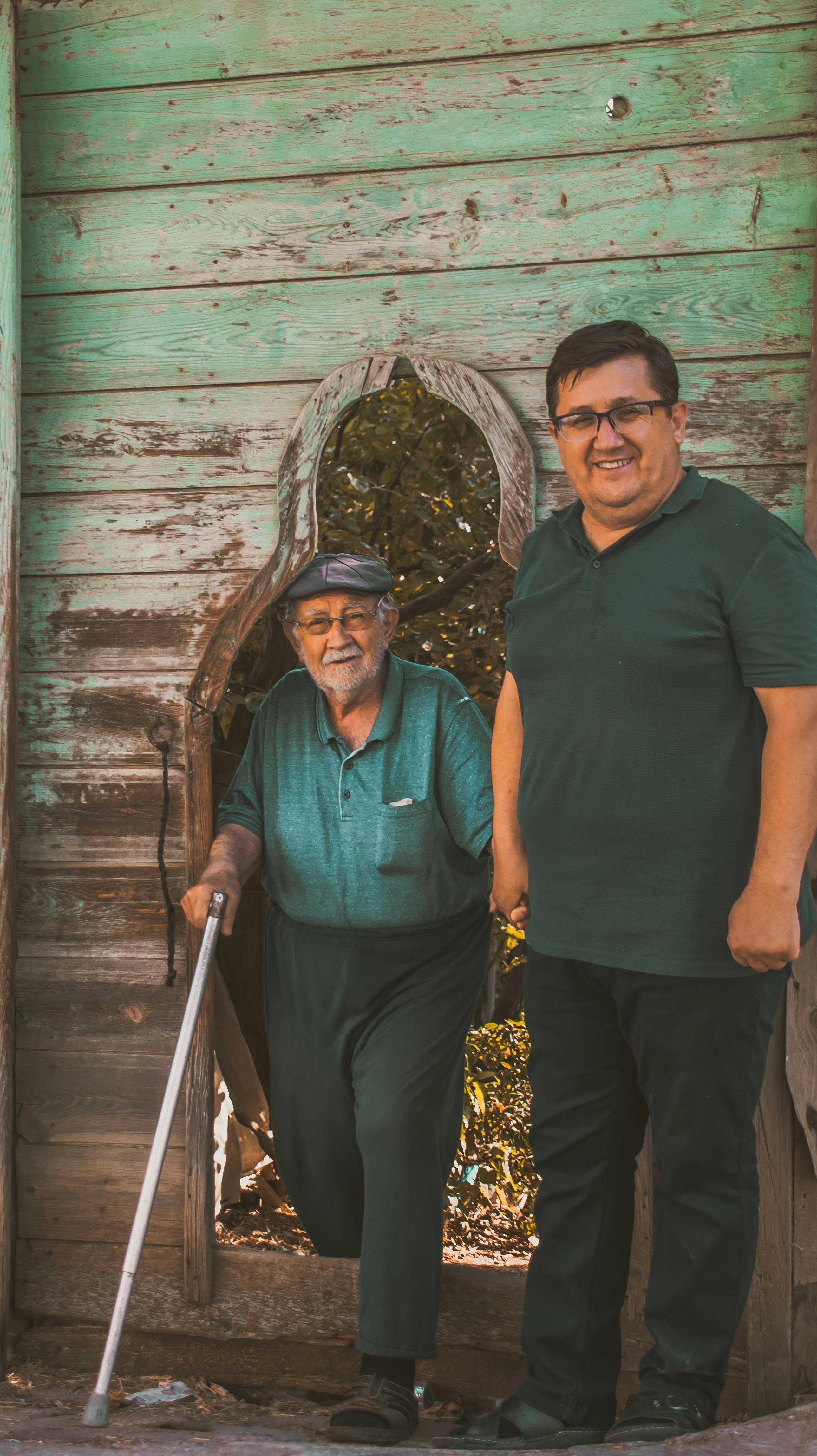
How to Trace Ukrainian and Russian Ancestors
Perex: Tracing Ukrainian and Russian ancestors can feel complex, but with the right understanding of history, archives, and digital tools like MyHeirloom, you can turn scattered clues into a meaningful, well-preserved family legacy.
Researching Ukrainian and Russian ancestry requires navigating shifting borders, multilingual records, and archives spread across several countries, yet it rewards the effort with rich insights into migration stories, cultural traditions, and intergenerational connections. By starting from what you already know, learning how Eastern European records are organized, and using modern online resources alongside traditional archives, it becomes possible to reconstruct family lines that seemed lost or obscured by the twentieth century’s upheavals.[2][4][17] As you gather documents, photographs, and stories, a central question emerges: how do you not only find this information, but preserve it in a way that future generations can understand and appreciate? This is where thoughtful digital platforms such as MyHeirloom become important, offering a structured space to turn raw genealogical data and fragmented memories into a coherent, secure, and emotionally meaningful legacy. In the pages that follow, this report will examine the historical context of Ukrainian and Russian genealogy, key record types and research workflows, and the role of modern digital legacy tools in ensuring that the results of this research do not simply disappear into disorganized folders or forgotten social media posts.
SEO Title: How to Trace Ukrainian and Russian Ancestors
Meta Description: Learn how to trace Ukrainian and Russian ancestors using historical archives, online resources, and thoughtful digital tools. Understand key record types, research workflows, and how MyHeirloom helps turn genealogical findings into an organized, secure family legacy.
Introduction: Why Tracing Ukrainian and Russian Ancestors Matters Now
Interest in Ukrainian and Russian genealogy has grown significantly in recent decades, driven by several overlapping trends. The global Ukrainian and Russian diasporas have matured, and many descendants of nineteenth- and twentieth‑century emigrants now feel ready to look backward, beyond their own lifetimes and that of their parents, toward earlier generations who left Eastern Europe under difficult circumstances.[1][4][17] Political changes since the end of the Soviet Union and the gradual opening of archives in Ukraine, Russia, Belarus, and neighboring countries have created opportunities that did not exist for earlier generations of family historians.[5][6][14][18] At the same time, contemporary events—from renewed conflict in the region to demographic shifts in North America and Western Europe—have underscored how fragile both memory and documentation can be, making genealogical work feel urgent rather than merely hobbyist.
For individual families, tracing Ukrainian and Russian ancestors often begins not with an abstract interest in history but with a concrete emotional need. Adult children and grandchildren may notice that a parent’s memories are fading, that boxes of photos remain unlabelled, or that no one can quite remember which village in Volhynia or near Tula the family came from.[2][3][5][19] Others encounter fragments of information in naturalization files, ship manifests, or old military papers and wonder what deeper stories those records contain.[2][4][17] This mixture of curiosity and concern can be complicated by feelings about past trauma, whether connected to tsarist oppression, Soviet persecutions, war, or the Holocaust, yet it often leads to a desire to understand both what happened and how those histories shaped the present family.
Modern technology has transformed how this process unfolds. On one side, specialized resources—FamilySearch historical collections, national archive portals, regional digitization efforts, and tools such as Routes to Roots and JewishGen—make it feasible for non‑specialists to access records that were once available only to professional researchers.[6][7][14][15][16][18] On the other side, everyday digital environments such as smartphones, cloud drives, and social media have become default storage spaces for family photographs and documents, yet they are rarely designed to preserve meaning, context, and relationships over decades. Without explanation, the emotional and historical value of files deteriorates; a photograph of a great‑grandfather in uniform means little if no one knows which army he served in or why he left his village.
This tension between unprecedented access to genealogical sources and fragile, fragmented personal storage is at the heart of why platforms like MyHeirloom matter for those exploring Ukrainian and Russian roots. MyHeirloom is conceptualized not as generic cloud storage but as a Legacy Room, a structured digital environment where Keepsakes, a Family Tree, My Tribe profiles, a Family Cookbook, and DocuVault entries transform raw data into curated stories and relationships that can be navigated and understood.[18] For descendants of Ukrainian and Russian emigrants, this means that once a village is identified or a parish register entry is found, it does not remain an isolated file; instead, it can be embedded into a narrative that connects people, places, recipes, and documents into a multidimensional family legacy. In this way, tracing ancestors is not only about discovering names and dates, but about building a durable bridge between archival research and meaningful digital preservation.
Historical and Geopolitical Context of Ukrainian and Russian Genealogy
Shifting Borders and Jurisdictions
One of the foundational challenges in Ukrainian and Russian genealogy is that the territories where ancestors lived rarely map neatly onto modern political borders. During the eighteenth and nineteenth centuries, most of what is now Ukraine and Russia formed parts of the Russian Empire, but substantial areas of present‑day western Ukraine were under Austrian (later Austro‑Hungarian) rule, and some regions alternated between Polish, Russian, and German administration across successive partitions and wars.[1][3][4][18] For genealogists, this means that the same town might appear in records under different languages, spellings, and jurisdictions, and archival holdings are often organized according to historical administrative units rather than current oblast divisions.[5][11][14]
Understanding these changes is not an academic luxury; it is a practical necessity. When searching catalogs such as FamilySearch or national archive databases, one must often query both the modern locality name and the historical province or gubernia in which it fell at the time an ancestor lived.[7][11][14] For example, a village that is now in Lviv oblast may have belonged to the Galizien administrative unit under the Austrian Empire, and military records for men from that area might be filed under Austrian, not Russian, jurisdiction.[2] Similarly, a town in today’s Zhytomyr oblast may appear in older records as part of Volhynia gubernia in the Russian Empire and later under Polish administration between the wars.[10][14] Without familiarity with these shifts, genealogists can easily search in the wrong archive or misinterpret a record’s provenance.
The complexity extends further when considering transliteration practices and multilingual naming. Place names in Ukraine and Russia can be written in Ukrainian, Russian, Polish, German, Yiddish, and other languages, and those forms are then transliterated differently into English depending on which standard is used.[14] The FamilySearch Catalog, for instance, often uses ALA‑LC transliteration, which may diverge from the spelling familiar from English‑language media, and this can confuse researchers who are unaware that Chernihiv and Chernigov refer to the same city.[14] Recognizing that administrative divisions and place names are fluid over time encourages a more patient, historically informed approach, where genealogists expect some ambiguity and cross‑check multiple variants to ensure that they are referring to the correct locality.
Waves of Migration from Ukraine and Russia
Tracing Ukrainian and Russian ancestors also requires paying attention to the major migration waves that carried people from Eastern Europe to the Americas and other regions. Ukrainians began emigrating in significant numbers during the late nineteenth century, especially from Galicia and Bukovina under Austro‑Hungarian rule, often seeking economic opportunity in Canada, the United States, and South America.[1][4] Additional waves followed in the early twentieth century, driven by agrarian hardship, political unrest, and later by dislocation after World War I and the Russian Revolution.[1][4] Many of these emigrants were peasants and smallholders, but there were also craftsmen, urban workers, and professionals, and their religious backgrounds varied among Orthodox, Greek Catholic, Roman Catholic, and Jewish communities.[1][3][7]
Russian emigration history likewise features several distinct periods. In the late nineteenth and early twentieth centuries, economic migration and religious dissent—such as the movement of Old Believer communities to new regions or abroad—played a role.[5][19] The early Soviet period saw both voluntary emigration and forced displacement of political opponents, noble families, and members of minority groups, followed by later waves of dissidents and Jews leaving the USSR during the Cold War.[18][19] Each of these periods produced different kinds of documentation: steamship passenger lists, visa files, consular records, refugee camp registers, and post‑war resettlement documents all contain clues about origins, family members, and travel routes.[2][4][17]
For genealogical research, recognizing which migration wave likely affected one’s ancestors helps focus attention on appropriate record sets and contextual narratives. A family that arrived in Canada in 1904 from “Galicia” might have left a paper trail in Austrian military records, Galician parish registers, and Canadian naturalization files.[1][2][4] By contrast, a Russian Jewish family that arrived in the United States in 1979 would appear in Soviet exit documents, US refugee processing records, and later immigration files, but the deeper genealogical trail would lead back to revision lists and metrical books in pre‑revolutionary gubernias.[12][18] Understanding these trajectories not only guides searches but also frames questions about how and why ancestors left, which can be important when interpreting oral traditions that may emphasize some aspects of departure and silence others.
Religious and Ethnic Diversity in Eastern European Genealogy
Another key element in Ukrainian and Russian genealogy is religious and ethnic diversity. The territories of the former Russian Empire and Austro‑Hungarian borderlands included Orthodox Christians, Greek Catholics, Roman Catholics, Jews, Protestants, and smaller communities such as Karaite Jews and Old Believers, each with their own religious record‑keeping practices.[1][3][6][18] Metrical books—the parish or synagogue registers of births, marriages, and deaths—were maintained by Orthodox, Catholic, and Jewish institutions and are among the most important sources for nineteenth‑ and early twentieth‑century genealogy.[6][18][19] However, not every group is documented identically, and access to surviving records can vary by denomination and region.
Jewish genealogical research in Ukraine and Russia, for instance, often relies on specialized resources such as the Routes to Roots database, which catalogs surviving Jewish vital records and census lists in Polish, Ukrainian, Belarusian, and Lithuanian archives.[7][16] Yizkor books—memorial volumes written after the Holocaust to commemorate destroyed communities—provide rich contextual information and sometimes lists of families, occupations, and communal structures.[7] Meanwhile, Orthodox parish registers may be more abundant in some provinces, in part because a 1722 decree in the Russian Empire required all parishes to keep metrical books and submit annual copies to diocesan consistories.[6] For families that belonged to Greek Catholic or Roman Catholic communities in Galicia, parish records are often preserved in central state historical archives, regional archives, or church archives, with some microfilmed and accessible through FamilySearch.[1][3][6]
Ethnic identity further complicates the picture. Ukrainians, Russians, Poles, Jews, Germans, Lithuanians, and others lived intermixed in many areas, and surnames can be influenced by multiple linguistic traditions. A single family might have had their name recorded in different languages depending on the official context, producing Russian, Ukrainian, and Polish variants alongside possible Yiddish forms.[1][14] Genealogists therefore need to be attentive not only to denominational affiliations but also to how ethnicity and language shaped naming conventions, record languages, and access to specific archives. This diversity is not merely an obstacle; it is also a source of richness, offering multiple angles from which to reconstruct family narratives and understand the cultural landscapes in which ancestors lived.
Core Principles of Tracing Ukrainian and Russian Ancestors
Beginning from What You Know: Oral History and Domestic Records
Despite the apparent complexity of Eastern European archives, the core methodological principle in tracing Ukrainian and Russian ancestors remains the same as in any genealogy: begin from what is known and documented in the present and work systematically backward. Professional guides consistently emphasize that the most accessible and indispensable source of information is the memory of living relatives, supplemented by domestic documents and artifacts.[2][3][4][5][17][19] Conversations with parents, grandparents, aunts, and uncles can reveal names, approximate birth and marriage dates, village or region names, religious affiliations, migration stories, and fragments of family legends that may look unimportant but later prove decisive.
Domestic records often include passports, naturalization certificates, military discharge papers, baptismal certificates, marriage licenses, funeral programs, and old letters. These documents frequently contain place names, references to parishes or synagogues, and hints about social status or occupation.[2][4][17] Even photographs can be informative: traditional embroidered clothing might reflect a particular Ukrainian region, while military uniforms can indicate service in the Austro‑Hungarian or Russian army.[2] The goal at this stage is not yet to resolve every detail but to gather as many fragments as possible, document them clearly, and check them against each other to identify consistent patterns and discrepancies.
Naturalization files in North America and Western Europe are particularly valuable for Ukrainian and Russian genealogy. US and Canadian citizenship documents, passenger manifests, and draft cards often record the town of origin, province, or gubernia under which it fell, as well as the name of relatives who sponsored immigration.[2][3][4][17] These data points may be the only surviving links between a modern‑day family and a pre‑war locality that underwent destruction or depopulation. By assembling such information systematically, researchers can move beyond vague statements like “near Lviv” or “somewhere in Volhynia” toward identifying precise localities that can be mapped, searched in gazetteers, and connected to specific archives.[3][4][7]
At this stage, platforms like MyHeirloom can already play a constructive role. Instead of leaving notes scattered across notebooks, apps, and email threads, a researcher can begin building a Legacy Room where early findings are captured as Keepsakes, linked to My Tribe profiles for each relative, and tentatively placed on a Life Timeline. This structured environment allows for gradual refinement: as new details clarify a grandparent’s birthplace or migration route, existing Keepsakes can be updated, cross‑referenced with documents, and connected to a growing Family Tree. In practical terms, this means that essential early clues—such as a remark about “Old Believer grandparents near Tula” or “Jewish relatives from a town now in Belarus”—do not get lost, and each small detail is preserved with context rather than as an isolated datum in a folder.
Names, Languages, and Transliteration
Names are both tools and traps in Ukrainian and Russian genealogy. Surnames and given names may shift with migration, assimilation, and changes in official language, producing multiple spellings for the same family. Ukrainian and Russian place names likewise appear in diverse transliterations, reflecting different linguistic standards and historical periods.[1][14] For genealogists, understanding these processes reduces confusion and improves the accuracy of searches across multilingual records and databases.
Ukrainian surnames can often indicate geographic or occupational origins, and some are tied to specific regions or communal traditions.[1] However, many surnames were adapted when families arrived in new countries; endings might be truncated, consonants altered to fit English pronunciation, or entire names replaced with more readily accepted forms. Russian surnames can display similar transformations, and patronymic naming conventions—where a middle name is derived from the father’s given name—may be lost in diaspora documents.[11][14] A careful researcher therefore treats names in immigration records as clues rather than immovable facts, considering how they might map back onto earlier forms recorded in Cyrillic or other scripts.
Transliteration standards add another layer of complexity. The FamilySearch Catalog and many library systems use the ALA‑LC standard to transliterate Ukrainian and Russian place names, which can diverge from English traditional spellings used in media or in family memory.[14] For example, Zhitomir might appear as Zhytomyr or Zhitomir depending on the source, and genealogists must be prepared to search all plausible variants.[10][14] Guides such as the FamilySearch Ukraine Genealogy page provide tables that compare English traditional, English ALA‑LC, Ukrainian, and Russian spellings for major cities, helping users identify the correct archival entries.[14] Being aware of these differences encourages more flexible search strategies and reduces the risk of missing records because a catalog query uses an unfamiliar spelling.
In practical terms, a disciplined approach to names involves documenting all observed variants—across domestic records, oral history, and archival sources—and linking them to a single individual or family group in a structured genealogy tool. Within MyHeirloom, for instance, a Family Tree entry for an ancestor from Chernihiv might include both “Chernihiv” and “Chernigov” as associated place names, along with transliterations that appear on different documents.[14] Weaver, MyHeirloom’s storytelling guide, can assist users in reflecting on how names changed over time and why, prompting them to describe their memories of a grandparent’s decision to adopt a new surname or Anglicize a given name. By treating names as dynamic rather than static, researchers better capture the lived reality of migration and identity, helping future generations understand why their family appears under different spellings in different records.
Locating the Ancestral Town
Identifying the ancestral town is often the pivotal moment in Ukrainian and Russian genealogy. Once a locality has been found, it becomes possible to determine which archives hold relevant parish registers, civil records, and census materials, and to explore historical maps and community histories.[2][4][7][10][16] However, reaching this point can be difficult, particularly when immigration records provide only partial or misspelled names, or when oral traditions remember only approximate regions.
Several tools assist in this process. Gazetteers—geographical dictionaries that list towns with their historical jurisdictions—allow researchers to search by place name and identify the province, district, and nearby larger cities.[2][7] Specialized resources such as the Galicia gazetteer and the town locator on Gesher Galicia help pinpoint towns in the former Austrian province, while JewishGen’s Communities database and Ukraine Town Location Guide provide coordinates, administrative details, and historical information for many Ukrainian localities.[2][7][10] Routes to Roots offers a database where one can enter a town name in its current spelling and discover which vital records, census lists, and other documents survive, and in which archives they are held.[16]
The process often begins with citizenship documents and passenger lists, which may include a town of origin alongside a broader region designation.[2][4][17] Obituaries, passport applications, military records, and sometimes censuses can also contain locality names, albeit with spelling variations and truncations.[2] By comparing these references, researchers can propose candidate towns and then test them against gazetteers and locator tools. For example, if several documents mention a town that sounds like “Zhitomir” in conjunction with references to Volhynia, a search in the Ukraine Town Location Guide and JewishGen Communities can confirm that Zhytomyr was a major city in the Volhynia region, and further searches can identify nearby villages that match more detailed clues.[10]
Give them the home they deserve. Bring your family legacy into the digital age.
Start archivingLocating the ancestral town has implications beyond finding records. It allows families to connect their story to landscapes, cultural traditions, and historical events specific to that locality. Within MyHeirloom, once a town is identified, the researcher can create Keepsakes that describe its history, attach photos of maps, and link these to My Tribe profiles and the Family Tree. Over time, a Life Timeline can show the movement from that town to later places of residence, illustrating the geographical arc of the family’s history. This is profoundly different from merely noting a town name in a spreadsheet; it embeds the locality within a narrative structure that future generations can explore, complete with contextual images and documents.
Common Mistakes and How to Avoid Them
Because Ukrainian and Russian genealogy involves multiple countries, languages, and record types, certain mistakes recur among beginning researchers. One common error is attempting to jump directly into Eastern European archives without first exhausting domestic records and oral history; this often leads to unfocused searches and frustration.[2][4][5][17][19] Another mistake is treating names and place spellings as fixed, leading to narrow queries that overlook variant forms in catalogs and databases.[1][14] Some researchers also underestimate the importance of historical geography, searching for towns only within current national borders rather than considering past imperial jurisdictions.[3][11][14][18]
Access-related misunderstandings are also frequent. Archives in Ukraine and Russia often operate with particular bureaucratic procedures, require physical visits, or restrict remote access, especially in recent years.[3][9][18] Researchers sometimes expect fully indexed, easily searchable databases and are discouraged when they encounter digitized but unindexed image collections that demand manual browsing.[6][9][15] Others assume that all records have survived, when in reality some parish registers, civil records, and census lists have been lost to war, neglect, or administrative reorganization.[16][18] Recognizing these limitations early encourages realistic planning and appreciation for the material that does exist.
A subtler mistake lies in focusing purely on data extraction without considering how to preserve and interpret findings for future family members. It is possible to spend years collecting documents without building a coherent narrative or organizational structure, leaving descendants with a dense but opaque archive. MyHeirloom is designed precisely to counter this tendency by offering a Legacy Room where genealogical discoveries are transformed into Keepsakes, family connections are mapped in My Tribe and the Family Tree, and important documents are safeguarded in DocuVault. By integrating preservation planning into research from the beginning, genealogists avoid the trap of creating a personal, undocumented archive that cannot be easily understood once they are no longer available to explain it.
Key Record Types and Where to Find Them
Parish Registers and Metrical Books
Parish registers, often referred to in the Russian context as metricheskie knigi or metrical books, are among the most important sources for tracing Ukrainian and Russian ancestors in the nineteenth and early twentieth centuries.[5][6][18][19] In the Russian Empire, a regulation issued in 1722 required every parish to keep such registers and to divide them into three sections—births, marriages, and deaths—creating a systematic record of vital events for members of Orthodox, Catholic, and Jewish communities.[6] A typical birth entry recorded the date of birth and baptism, the infant’s name, the parents’ names and social status, and the names of godparents; these details often reveal extended family relationships and neighborhood networks.[6] Marriage entries noted the bride and groom’s names and ages, their social class, the ordinal number of the marriage for each (first, second, etc.), and the names of witnesses.[6] Death entries contained the deceased’s age, a sometimes imprecise cause of death, and place of burial.[6]
Metrical books for Orthodox parishes were usually kept in two copies: one remained in the parish, while the other was copied and sent annually to the diocesan consistory, ensuring an archival backup.[6] For Catholic and Jewish communities, similar record‑keeping structures existed, with synagogue registers documenting births, betrothals, marriages, and deaths.[18] Although the quality and completeness of these records varied, they generally provide a consistent framework for reconstructing family lines across multiple generations, especially when combined with later civil registration and census data.[18] For Ukrainian and Russian genealogists, identifying which parish or synagogue served an ancestral town is therefore a critical step, as it determines which metrical books to seek in archives.
Access to parish registers has improved substantially through digitization. FamilySearch holds millions of scanned Russian church records and parish registers from Ukraine, Belarus, and other regions, often organized by province and year.[5][6][9][15] Specialized sites such as metrics.tilda.ws offer a catalog of digitized Russian parish registers, indicating which years and parishes have surviving records and where they are held.[6] Regional state archives in Ukraine and Russia maintain the original metrical books or their duplicates, and many have started to post scans in their own information systems.[5][9][14][18] In Western Ukraine, metrical books for parishes in former Galicia may also be found in Polish state archives, reflecting the region’s complex administrative history.[3][16][18]
Working with these records requires patience and some familiarity with old Cyrillic handwriting and terminology. Entries are not indexed and must be browsed page by page, often in handwritten script that can be challenging at first.[5][6][18] Researchers may need to read archaic Russian or Polish, and entries can use ecclesiastical calendars or local dating conventions. This is where collaboration with local researchers or archivists can be invaluable, particularly when dealing with parishes whose records are not digitized.[3][18] Yet once a family is identified in a metrical book, the genealogical payoff can be substantial: entire sibling groups, parental generations, and kinship networks become visible, anchoring oral traditions in concrete archival evidence.
Civil Registration, Soviet Records, and Household Books
In addition to religious records, civil registration and Soviet‑era documentation form crucial components of Ukrainian and Russian genealogy. As modern states formalized record‑keeping, civil registries began to record births, marriages, and deaths independent of church structures, and Soviet authorities developed extensive systems for tracking population, residence, and household composition.[11][14][18] For ancestors who lived well into the twentieth century, these records often provide more detailed and standardized information than parish registers, including occupation, nationality, and exact addresses.
In Ukraine, civil registration is typically managed by local registry offices known as ZAGS (Zapis aktov grazhdanskogo sostoyaniya), and Soviet‑era registries and local councils hold newer records, although access may be limited by privacy laws.[3][14][18] Household books (pokhozyaystvennye knigi), maintained during the Soviet period, record the composition of each household, listing family members, ages, and relationships, and can be the only source for the mid‑twentieth century when metrical books ceased but civil registration had not yet been fully systematized.[18] These records are usually held in local archives or village councils, requiring targeted inquiries once the ancestral locality has been identified.[18]
Censuses conducted under the Russian Empire and Soviet Union also play a role. Revision lists (revizskie skazki), compiled between 1718 and 1858 to support a national poll tax, recorded serfs, townspeople, and merchants with their ages, family composition, and sometimes provenance.[12][18] These lists are invaluable for finding ancestors in the eighteenth and early nineteenth centuries, especially when metrical books are missing for earlier periods.[12][18] The 1897 census of the Russian Empire, the only comprehensive census of that era, provides data on religion, property, place of birth, and family members living in each household.[17] Soviet censuses, while less accessible in some cases, further document population changes and can be useful when available.
Access to civil and Soviet records varies by country and archive. For Ukraine, the central and regional state archives—linked through portals such as Ukrderzharchiv—hold much of the relevant material, with portions digitized and accessible online.[3][9][14][18] For Russia, regional archives manage holdings by oblast, but foreign researchers have faced increasing access restrictions since 2022, making digitized pre‑war material particularly important.[5][18] FamilySearch and other platforms host some Soviet‑era records, and local archive portals may provide online catalogs indicating which civil registration and household books survive.[15][18] As with parish registers, navigating these resources often requires understanding historical jurisdictions and being prepared for language barriers.
These record types highlight why genealogical research cannot stop at discovering names and dates; interpretation is needed to understand how ancestors lived under different political regimes. Within MyHeirloom, civil and Soviet records can be stored securely in DocuVault, particularly when they include sensitive personal information, while their narrative significance can be explored through Keepsakes that explain the context of a revision list entry or the implications of a household book listing. By separating secure document storage from creative storytelling, MyHeirloom allows genealogists to respect privacy while still building a rich, accessible narrative for future generations.
Immigration, Military, and Diaspora Records
For many descendants of Ukrainian and Russian emigrants, the most accessible records are those created during ancestors’ lives in destination countries, especially in North America. Guides emphasize that researchers should start with local census records, immigration and naturalization files, vital records, and religious records in the countries where ancestors settled.[2][4][17][19] These materials not only document the lives of emigrants after arrival but often contain crucial references to their origins, including town names, provinces, and parental information.
Passenger lists and immigration records are particularly important. Ship manifests often provide detailed information about passengers, including their age, marital status, occupation, last residence, and intended destination, and may note the name of a relative or friend in the country of origin.[2][4][17][19] Naturalization records in the United States and Canada can include the town and country of birth, as well as dates of arrival and court records related to citizenship petitions.[2][3][4][17] Military draft cards and service records may list place of birth, occupations, and family status, and in some cases indicate whether an individual had prior service in the Russian or Austro‑Hungarian army.[2][17]
Religious records in the diaspora—church and synagogue registers of baptisms, marriages, and funerals—add another layer of information. For Ukrainian emigrants, identifying which Ukrainian churches or Greek Catholic parishes an ancestor attended in North America can lead to sacramental records that repeat or clarify origins.[4] For Jewish families, synagogue membership lists and communal records may preserve place names and family relationships crucial for reconnecting with Eastern European communities.[7] Community histories, cemetery records, and local histories also provide context and may include biographical sketches of prominent individuals.
These diaspora record types are the bridge between present‑day families and Eastern European archival material. MyHeirloom can serve as a central repository where scanned passenger lists, naturalization papers, and religious records are uploaded into DocuVault and cross‑linked with Keepsakes that explain their significance. For example, a Keepsake might combine a ship manifest image with a narrative describing how a great‑grandfather left Odessa in 1910, including oral history about why he chose a particular destination. That Keepsake can then be anchored on the Life Timeline at the date of departure, while the Family Tree reflects the branching of descendants in the new country. By weaving records and stories together, MyHeirloom helps ensure that diaspora documents are not only preserved but also understood within the larger family narrative.
Online Resources and Portals
The proliferation of online genealogical resources has transformed Ukrainian and Russian research. FamilySearch, a leading free platform, hosts extensive collections of Russian and Ukrainian parish registers, civil records, censuses, and other materials, often as digitized images rather than indexed databases.[5][6][9][11][14][15] Its wiki pages for Russia Genealogy and Ukraine Genealogy provide detailed guidance on administrative divisions, record types, and research strategies, including explanations of how old and new jurisdictions interact and how parish registers and revision lists function.[11][12][14] The Russia Online Genealogy Records and Ukraine Online Genealogy Records pages list links to databases and indexes that cover births, marriages, deaths, biographies, cemeteries, censuses, immigration, land records, military records, newspapers, and probate records.[13][15]
Specialized tools complement these general platforms. Metrics.tilda.ws catalogs digitized Russian parish registers organized by province, helping researchers identify which metrical books are available online and where originals are held.[6] Archives.ru serves as a directory of Russian state archives, providing contact information and descriptions of holdings.[6] In the Ukrainian context, national and regional archive portals, often accessible through the official Ukrderzharchiv site, link to individual archive websites and information about their digitized collections.[9][14][18] Routes to Roots maintains a database of vital records and census lists preserved in Polish, Ukrainian, Belarusian, and Lithuanian archives, allowing users to search by town name and discover what types of documents exist and where they are located.[16]
Jewish genealogical resources deserve special mention. JewishGen’s Communities database and Ukraine Special Interest Group pages offer maps, research tools, given‑name databases, and access to projects such as the Zhitomir Collection, which includes images and information about specific communities.[7][10] The Center for Jewish History provides a yizkor book bibliography, and JewishGen hosts the Yizkor Book Project, making many memorial books accessible online.[7] For Western Ukrainian towns formerly in Galicia, the Jewish Historical Institute in Warsaw and Polish state archives hold significant collections of Jewish vital records and communal documents that are indexed or cataloged through collaborative projects.[7][16][18]
Newer tools such as Inspector Duck, referenced in contemporary guides, help researchers determine whether parish records for specific Ukrainian localities have been digitized and where they are hosted, allowing more targeted browsing of FamilySearch image collections.[9] Recent guidance for Ukrainian genealogy emphasizes that, for many regions, FamilySearch’s catalog and these supplementary tools are the first stop, while for areas affected by current conflicts—such as Crimea, occupied parts of Donetsk and Luhansk, and Mariupol—pre‑war digitized copies may be the only safe and accessible sources.[9] For regions like Kharkiv, Kherson, and Chernihiv, researchers are advised to check the current status of archives before planning research.[9]
While these digital resources dramatically expand access, they also reinforce the need for thoughtful organization and preservation. A researcher might download dozens of parish register images, revision list pages, or town locator screenshots, but without a coherent system, these files may become as fragmented as old shoeboxes of photographs. MyHeirloom offers a way to integrate such digital materials into a narrative framework: scanned records can be uploaded as supporting media in Keepsakes, linked to specific individuals in My Tribe and Family Tree, and stored permanently in DocuVault. This helps genealogists move beyond the mere acquisition of files toward the creation of an enduring, contextualized digital legacy.
Practical Research Workflows for Ukrainian and Russian Genealogy
Working from the Present Backward
An effective workflow for Ukrainian and Russian genealogy begins with the present and proceeds backward in time, building a chain of evidence rather than jumping prematurely into unfamiliar archives. Guides emphasize starting with local records in the country where the researcher lives: census entries, vital records, immigration and naturalization files, and religious records that document ancestors after their arrival.[2][4][17][19] These records provide confirmed names, dates, and relationships, which can then be used to interpret older, foreign documents accurately.
In practice, this means systematically collecting birth and marriage certificates for the parents’ and grandparents’ generation, recording full names, dates, and places, and confirming these details across multiple sources where possible.[2][17] Census records help establish residence patterns and family compositions at specific points in time, while obituaries and funeral records may reveal additional relatives and provide clues about origins.[2][4][17] As these data are gathered, the researcher can begin building a preliminary Family Tree, noting uncertainties and alternative hypotheses along the way.
MyHeirloom can function as the organizational backbone during this phase. Each known relative can be represented in My Tribe, with personal profiles enhanced by scanned documents and photos. Keepsakes can narrate key life events—marriages, moves, career milestones—and link to underlying records stored in DocuVault. The Life Timeline provides a visual representation of the family’s chronology, showing where and when ancestors lived. This digital structure not only keeps information organized but also makes it easier to spot gaps and inconsistencies that require further research, such as an unexplained change in surname or a missing migration event.
Moving into Eastern European Archives
Once domestic records and oral history have established a solid foundation, the next step is to transition into Eastern European archives, guided by the ancestral town(s) and regions identified earlier. Researchers should first consult online resources such as FamilySearch catalog entries, national archive portals, and specialized databases like Routes to Roots to determine which record sets exist for relevant localities.[5][6][9][14][15][16][18] The goal is to identify specific parish registers, civil registration books, revision lists, and other materials that match the time period and place associated with ancestors.
Because many digitized collections are not indexed, browsing is often necessary. For example, if a family is known to have lived in a village near Zhitomir in the late nineteenth century, the researcher might search the FamilySearch catalog for Zhytomyr and Volhynia, check Inspector Duck or similar tools to see which Orthodox parish registers have been digitized, and then manually browse birth and marriage entries for the relevant years.[9][10] Similarly, if revision lists exist for the region and time frame, these can be examined for surnames matching the family, taking into account possible variants.[12][18] Jewish genealogists may use JewishGen and Routes to Roots to locate surviving Jewish vital records and community lists for specific shtetls.[7][16]
Working directly with archives requires preparation and patience. Some archives allow email or postal requests for searches, while others expect researchers or hired professionals to visit in person.[3][18][19] Language barriers and bureaucratic procedures can be significant, particularly in Russia, where access for foreign researchers has become more restricted.[18] Guides commonly recommend collaborating with local genealogists who understand old handwriting, archival structures, and administrative rules.[3][18][19] This collaborative approach not only increases the likelihood of locating relevant records but also helps interpret them within their historical context.
Micro FAQ: Common Questions When Starting Eastern European Ancestry Research
Question: Is it necessary to know the exact town before working with Ukrainian or Russian archives?
Answer: It is strongly advisable to identify at least a plausible locality before engaging Eastern European archives, because records are organized by parish, district, and town rather than by surname.[2][3][4][7] Without a locality, searches become extremely broad and inefficient, whereas even approximate town names can be cross‑checked in gazetteers and locator tools to narrow down relevant archives.[2][7][10][16]
Question: If I cannot read Ukrainian or Russian, can I still do meaningful research?
Answer: Yes, many researchers work effectively without full language proficiency by relying on transliteration tables, guides to genealogical word lists, and collaboration with local researchers or translators.[3][14][15][18] FamilySearch and other platforms provide genealogical word lists and primers on old handwriting, and hiring a professional for archival work is common and often cost‑effective when dealing with complex records.[3][18][19]
Question: Are online databases enough, or do I need to contact archives directly?
Answer: Online databases and digitized collections are an excellent starting point and sometimes sufficient, especially for well‑documented regions and periods.[5][6][9][14][15] However, not all records are digitized, and important holdings may exist only in physical form, particularly for smaller towns or less studied communities.[16][18] When online resources reach their limits, targeted contact with archives or collaboration with local researchers becomes necessary.
Integrating Research Findings into a Coherent Narrative
As research progresses, genealogists often find themselves in possession of an expanding set of records across different time periods and countries: parish register entries, revision list pages, immigration files, civil certificates, household books, and community histories. The challenge then shifts from discovery to integration—how to weave these materials into a coherent narrative that both respects factual details and makes sense to family members who are not genealogists.
Traditional genealogical charts and narrative reports serve this role to some extent, but they can be difficult for younger or less historically inclined relatives to engage with. MyHeirloom offers an alternative approach, where genealogical data is embedded in a rich multimedia environment. Each significant archival discovery can become the core of a Keepsake, accompanied by photographs of the document, transcriptions, translations, and personal reflections on what the record reveals about the ancestor’s life. These Keepsakes can be linked to My Tribe profiles and placed on the Life Timeline to show chronological development, while the Family Tree provides a structural overview of relationships across generations.
Store your most cherished memories and heritage safely on Heirloom.
Preserve our memoriesDocuVault plays a particular role for sensitive or legally important records, such as copies of naturalization certificates, wills, or health information. These documents can be stored securely, with access controlled according to user preferences, while contextual narratives about them are separately preserved in Keepsakes that may be shared more widely. Weaver can help users reflect on how to describe complex histories—for instance, guiding them through questions about how a grandparent’s experience of Soviet repression or wartime displacement influenced the family’s later life. By offering both structured data and narrative tools, MyHeirloom enables genealogists to move beyond research for its own sake toward the creation of an accessible, lasting, and emotionally resonant legacy.
Digital Legacy and the Role of MyHeirloom
From Scattered Files to an Organized Legacy Room
Many genealogists eventually realize that the problem is not only how to find information, but how to keep it in a form that retains meaning over time. Ordinary digital storage—cloud drives, folders on a laptop, email attachments, and social media posts—tends to fragment information and strip it of context. Files accumulate without clear naming conventions; a photo of a village cemetery sits in one folder, a scan of a parish register in another, and a written account of migration stories remains buried in a document that no one else can locate. The risk is that, even if substantial research has been done, its fruits may become inaccessible or incomprehensible to future generations once the researcher is no longer present to explain.
MyHeirloom addresses this issue by framing personal and family history as a Legacy Room rather than as a simple file repository. In this central digital space, users can organize their life story, family stories, media, documents, and connections in a structured way that prioritizes meaning and relationships. Keepsakes function as multimedia scrapbook entries where photos, videos, text, audio recordings, and documents are combined into coherent stories. The Life Timeline provides a chronological visualization of dated memories and events, allowing users to see how their own life and their ancestors’ lives unfolded over time. My Tribe and the Family Tree map relationships and intergenerational connections, while the Family Cookbook preserves recipes and rituals that carry cultural and emotional significance.
For those tracing Ukrainian and Russian ancestors, this structure offers several advantages. Instead of leaving parish register scans in a generic “Genealogy” folder, a user can create a Keepsake titled “Birth Record of My Great‑Grandfather in Chernihiv, 1892,” attach the scan, provide an English summary of the record, and add contextual information about Chernihiv’s history and religious community. That Keepsake can be linked to the great‑grandfather’s profile in My Tribe and placed on the Life Timeline at the date of birth. Subsequent discoveries—such as his marriage in a nearby parish or his immigration to Canada—can become separate Keepsakes, visually connected through the Life Timeline and structurally attached to the same individual in the Family Tree. Over time, this transforms isolated documents into an integrated narrative that future family members can navigate intuitively.
Privacy‑First Preservation of Sensitive Information
Genealogical research into Ukrainian and Russian histories often touches on sensitive topics: political repression, deportations, wartime collaboration or resistance, religious persecution, and the Holocaust. Documents related to these histories—such as Soviet NKVD files, Holocaust testimonies, or personal letters about traumatic experiences—require careful handling. At the same time, modern families may need to store important contemporary information alongside historical materials: copies of wills, medical directives, property records, and instructions for what should happen to the digital legacy itself after a person’s passing.
MyHeirloom is designed as a privacy‑first platform where users control the visibility of their content and can separate creative memories from secure information. DocuVault provides a dedicated space for important and sensitive documents that the user wants preserved during and after their lifetime, accessible only through an additional password and with session‑based access controls. Users can decide whether DocuVault contents become visible to Trustees after their passing or remain private, and can store documents such as property information, medical records, and letters to loved ones without making them broadly accessible during life. MyHeirloom uses encryption and secure servers to protect data in transit and at rest, and content is backed up regularly to reduce the risk of loss, although it does not claim to replace legal services or guarantee absolute permanence.
For genealogists working with sensitive archival material, this separation is crucial. Copies of persecution files or lists of relatives who perished in the Holocaust can be stored in DocuVault, while the broader narrative of what happened can be conveyed in Keepsakes that are shared more widely or kept private according to user preference. Family members can thus access the story in a way that respects emotional boundaries and privacy, without encountering raw documents unexpectedly. MyHeirloom’s default account setting is private, and users can selectively make specific Keepsakes or recipes public, sharing links with relatives when ready. This granular control aligns well with the ethical considerations of working with painful histories, where not every document needs to be visible to every person at all times.
Trusteeship, Patron Accounts, and Intergenerational Continuity
Genealogical research is inherently intergenerational, yet digital accounts are typically tied to a single user and may become inaccessible after that person’s death. MyHeirloom addresses this by offering Trusteeship and Patron account features that help ensure continuity. A user can invite a trusted person—a spouse, child, close friend, or other relative—to become a Trustee, with permissions that take effect only after the user’s passing has been verified through a formal process. Trustees can then access content in view‑only mode, administer certain aspects of the account, and add another Trustee to secure continuity, but cannot erase the account or remove other Trustees. This structure is intended to preserve the Legacy Room as a long‑term resource for the family, even when the original author is no longer present.
Patron accounts allow users to create secondary Legacy Rooms for other individuals, such as a child, parent, or deceased loved one. In the context of Ukrainian and Russian genealogy, a Patron account might be set up to tell the life story of a grandparent who emigrated from Kyiv in the 1920s or a great‑aunt who survived wartime deportations. The user can collect documents, photos, and stories about that person into their Patron account, using Keepsakes, My Tribe, Family Tree, Family Cookbook, and DocuVault as appropriate. If the person is still alive, they may later become the owner of the account if they wish, adding their own memories and perspectives.
These continuity mechanisms help address a key vulnerability in personal digital archives: the tendency for accounts and files to become orphaned when their owner dies or stops maintaining them. In genealogical terms, it means that research and narratives about Ukrainian and Russian ancestors can be curated and preserved beyond a single generation, enabling grandchildren and great‑grandchildren to access the Legacy Room decades after it was created. For users considering how best to ensure that their genealogical work endures, starting for free with MyHeirloom and setting up Trusteeship and Patron accounts offers a structured path toward long‑term preservation without attempting to replace legal estate planning or formal archival deposit.
MyHeirloom as a Companion to Genealogical Tools
It is important to emphasize that MyHeirloom is not a replacement for genealogical research tools such as FamilySearch, JewishGen, or national archive catalogs. Rather, it is a complementary platform that helps transform research outputs into a meaningful, organized legacy. Genealogists will still need to consult archival sources, browse metrical books, use gazetteers, and collaborate with researchers to discover information about Ukrainian and Russian ancestors.[5][6][7][14][18] What MyHeirloom offers is a space to assemble those discoveries in a way that family members can understand and engage with, bridging the gap between specialized research and everyday storytelling.
For example, a researcher might use FamilySearch’s Russia Genealogy wiki to understand how revision lists work and then locate relevant lists in regional archives.[11][12][18] After finding an entry that lists a family in the 1858 revision for Grodno, they might create a Keepsake in MyHeirloom titled “Our Family in the 1858 Revision List from Grodno,” attach a scanned image or photograph of the page, and write an explanation of each column and entry in plain language. Weaver can help refine this explanation, suggesting questions about how the family’s ages and statuses at that time reflect broader historical circumstances. This Keepsake can then be linked to the relevant individuals in the Family Tree, illustrating how genealogical evidence supports particular relationships and generational sequences.
By offering a free Basic plan for initial exploration and paid plans with additional storage and capacity, MyHeirloom allows users to experiment with organizing their genealogical materials without immediate financial commitment. A good starting point is to create a Legacy Room, upload a handful of key documents and photos as Keepsakes, build a basic Family Tree, and see how the Life Timeline visualization helps clarify the family story. From there, users can decide whether to expand their use of the platform, including setting up DocuVault for important documents and using Patron accounts to tell the stories of other family members. For those who have already accumulated sizable research in scattered folders, starting for free with MyHeirloom can be a practical first step toward transforming a private archive into a structured, shareable, and secure legacy space.
Ethical, Privacy, and Emotional Considerations in Genealogical Work
Handling Difficult Histories
Ukrainian and Russian genealogical research frequently encounters difficult histories. The twentieth century brought revolutions, famines, forced collectivization, deportations, political purges, wartime occupation, and the Holocaust, all of which shaped families’ trajectories. Archives contain records that speak to these events—NKVD and KGB files, deportation lists, prison records, and Holocaust documentation—yet working with such materials requires emotional sensitivity and ethical reflection. Descendants may discover that an ancestor was both victim and participant in complex political situations, or that long‑silenced traumas underlie familiar family patterns.
Researchers must decide how to present these histories within the family. Some relatives may prefer not to engage with detailed accounts of persecution, while others feel a strong need to understand and remember. Digital platforms like MyHeirloom can help navigate these differences by allowing users to tailor visibility settings. A user might create a deeply detailed Keepsake about their grandmother’s experience in a Soviet labor camp, kept private or shared only with certain relatives, while crafting a more general public Keepsake that focuses on resilience and survival. DocuVault can hold raw documents, such as official case files, with access limited to Trustees or designated individuals, while narrative Keepsakes provide a mediated account for broader audiences.
It is important to avoid sensationalizing or exploiting these histories. Genealogical storytelling should respect the dignity of those involved, acknowledge ambiguity, and refrain from drawing simplistic moral conclusions about complex situations. Weaver can assist by prompting reflective questions—asking, for example, what the ancestor might have felt at different moments, what choices were available, and how subsequent generations responded. By integrating emotional intelligence into genealogical narratives, MyHeirloom supports a balanced approach that honors past suffering without reducing ancestors to single stories.
Privacy and Consent in Family Storytelling
Another ethical dimension concerns privacy and consent. Genealogical research inevitably involves information about living relatives: their relationships, health histories, personal experiences, and sometimes conflicts. While archival records about deceased ancestors are generally considered fair to incorporate into public narratives, details about living individuals require careful consideration. Not every cousin will appreciate having their personal story shared online, and not every family wants full transparency about certain topics.
MyHeirloom’s privacy‑first design is intended to address these challenges. Users can keep their account private by default, choosing to make only specific Keepsakes or recipes public, and can control who sees different parts of their Legacy Room. Sharing can occur through direct URLs to particular Keepsakes rather than by opening the entire account. This allows genealogists to circulate historical stories while keeping sensitive contemporary information restricted. For living relatives, inviting them into My Tribe and discussing how they want their profile presented can foster collaborative consent and reduce misunderstandings.
In addition, the separation between creative storytelling and secure document storage within MyHeirloom helps maintain boundaries. Health information, financial details, and legal documents can be stored in DocuVault, which requires an additional password and provides limited, controlled access. Narrative references to these topics can be kept more general in Keepsakes, avoiding unnecessary exposure of private data. By designing legacy preservation around user‑controlled visibility and security, MyHeirloom supports ethical genealogical practice that respects both the past and the present.
Emotional Support and Community
Genealogical work can be emotionally demanding. Discovering previously unknown tragedies, recognizing patterns of loss and migration, or confronting family myths can evoke grief, pride, anger, and confusion. While genealogists often find solace and insight in sharing their discoveries with relatives, they may also feel isolated if others are not immediately interested. Digital spaces that encourage thoughtful sharing and collaboration can therefore play a supportive role.
MyHeirloom is evolving toward broader community features, but even in its current form, it provides relational infrastructure through My Tribe and Family Tree. Users can invite family members to view specific Keepsakes, comment on stories, and contribute their own memories, creating a modest but meaningful community around the Legacy Room. The act of building Keepsakes together—uploading photos, co‑writing narratives, preserving recipes—can itself be healing, transforming genealogical research into a shared creative project that reinforces family bonds.
At the same time, it is important to recognize that MyHeirloom is not a therapist, lawyer, or clergy member, and that some emotional and ethical questions may require professional support. The platform can help organize and present memories, but it does not offer clinical guidance or legal advice. For users engaged in particularly challenging genealogical investigations—for example, uncovering evidence of violent crimes or deeply traumatic experiences—combining digital legacy tools with appropriate professional support may be advisable.
Conclusion: From Ancestral Research to Lasting Legacy
Tracing Ukrainian and Russian ancestors is both a demanding and deeply rewarding endeavor. It asks researchers to navigate shifting borders, multilingual records, and archives scattered across several countries, while remaining attentive to the emotional weight of histories that include revolution, war, persecution, and migration. By starting from what is known—oral histories, domestic documents, and local records—and moving systematically backward through immigration files, parish registers, civil and Soviet records, and specialized databases, genealogists can reconstruct family narratives that seemed irretrievably lost.[2][4][5][6][11][14][17][18][19] Understanding historical geography, religious diversity, and transliteration standards further enhances this process, reducing confusion and opening doors to archives that might otherwise remain obscure.[1][3][7][10][14][16]
Yet genealogical work does not end with the discovery of names and dates; it culminates in the creation of a legacy that future generations can engage with. Ordinary digital storage is often fragmented and context‑free, leaving photos, videos, and documents vulnerable to misinterpretation or neglect. MyHeirloom offers a different path by providing a structured Legacy Room where Keepsakes, My Tribe, the Family Tree, Life Timeline, Family Cookbook, and DocuVault together turn scattered memories, relationships, and important information into an organized, secure, and meaningful whole. For those tracing Ukrainian and Russian ancestors, this means that each archival find can be translated into a story, each locality can be mapped within the family’s journey, and each sensitive document can be preserved with appropriate privacy.
The combination of rigorous research and thoughtful digital preservation creates a durable intergenerational bridge. Children and grandchildren can explore their ancestors’ lives not only through lists of dates but through narratives enriched with images, audio, recipes, and reflections, all anchored in verified records. Trusteeship and Patron accounts help ensure continuity beyond a single lifetime, while privacy controls respect evolving family boundaries. For readers who are beginning or deepening their exploration of Ukrainian and Russian roots, the next step is to consider how they want their findings to live beyond them. Exploring how MyHeirloom works and starting for free to build a Legacy Room can be a practical, gentle way to begin turning genealogical research into a living, accessible legacy that will matter for generations.
FAQ
Question: How do I start tracing Ukrainian ancestors if I only know a region name, such as “near Lviv” or “in Volhynia”?
Answer: Begin by collecting all available domestic records and oral history, focusing on immigration, naturalization, census, and religious records in the country where you live.[2][3][4][17] These documents may contain partial or approximate place names, which you can then cross‑reference in gazetteers, town locator tools, and databases such as Gesher Galicia, JewishGen Communities, and the Ukraine Town Location Guide to narrow down candidate towns.[2][4][7][10][16] Once you have a plausible locality, consult FamilySearch and national archive catalogs to identify parish registers and civil records for that area, and work backward chronologically from the most recent events. As you make progress, consider using MyHeirloom to organize your findings into Keepsakes and a Family Tree, ensuring that each new locality is embedded in a coherent narrative.
Question: What records exist for Russian ancestors before 1900, and how can I access them?
Answer: For Russian ancestors in the eighteenth and nineteenth centuries, key sources include parish registers (metrical books) and revision lists, which documented births, marriages, deaths, and households within the Russian Empire.[6][12][18] Parish registers were maintained by Orthodox, Catholic, and Jewish communities, while revision lists were compiled to support a national poll tax and recorded ages, family composition, and sometimes provenance.[12][18] Many of these records are preserved in regional state archives and the Russian State Historical Archive, with substantial portions digitized and accessible through FamilySearch and specialized catalogs such as metrics.tilda.ws.[5][6][11][13][18] Because access to Russian archives has become more restricted in recent years, focusing on pre‑war digitized materials and collaborating with local researchers can be particularly important.[5][18]
Question: Is storing genealogical files in a regular cloud folder enough to preserve my family history?
Answer: Regular cloud folders are helpful for backup but are rarely sufficient for preserving family history in a meaningful way, because they typically lack structure, narratives, and clear relationships among files. Photographs, scans, and documents can pile up without explanation, making it difficult for future generations to understand who appears in a photo, what a document represents, or how different files relate. A platform like MyHeirloom is designed to address this gap by turning digital content into Keepsakes connected to My Tribe profiles and a Family Tree, anchored on a Life Timeline and stored within a coherent Legacy Room. This approach not only preserves files but also the context, stories, and relationships that give those files enduring value.
Question: How can I use MyHeirloom alongside traditional genealogy tools such as FamilySearch or JewishGen?
Answer: MyHeirloom is best viewed as a companion to traditional genealogy tools rather than a replacement. Use FamilySearch, JewishGen, Routes to Roots, and national archive catalogs to discover records and understand historical contexts.[5][6][7][11][14][15][16][18] Then, use MyHeirloom to transform those discoveries into accessible stories: create Keepsakes around key documents, link them to individuals in My Tribe and the Family Tree, and place them on the Life Timeline. Store sensitive documents in DocuVault and use Weaver to refine narratives and reflect on what you want to preserve. This combination allows you to leverage the strengths of research platforms while ensuring that your findings are organized and meaningful for your family.
Question: Do I need to speak Ukrainian or Russian to begin research into my ancestors from those regions?
Answer: No, you do not need full language fluency to begin meaningful research. Many resources are available in English, including FamilySearch wiki guides, genealogical word lists, transliteration tables, and international collaboration forums.[3][11][14][15][18] You can start by working with domestic records in your own language and then gradually learn key genealogical terms in Ukrainian, Russian, Polish, or other relevant languages. For more complex archival work, hiring a local researcher or translator is common and can be highly effective.[3][18][19] As you gather records and stories, MyHeirloom can help you present them in English, ensuring that language barriers do not prevent your family from understanding their legacy.
Question: What is the most natural way to begin using MyHeirloom if I already have scattered genealogical materials?
Answer: A natural starting point is to sign up and start for free, create your Legacy Room, and upload a small selection of your most important documents and photographs as Keepsakes. Focus first on one or two ancestors whose stories you know relatively well—perhaps a grandparent who emigrated from Ukraine or Russia—and build their profile in My Tribe, connect Keepsakes to them, and sketch their branch of the Family Tree. As you see how the Life Timeline organizes events chronologically and how DocuVault can securely store sensitive records, you can gradually expand to other relatives and generations. This incremental approach turns scattered files into an organized legacy without overwhelming you, and it gives your family a clear, engaging way to explore your work.

MyHeirloom gives you a dedicated Legacy Room—a private, secure space to collect photos, videos, documents, and stories.
Start now for free