
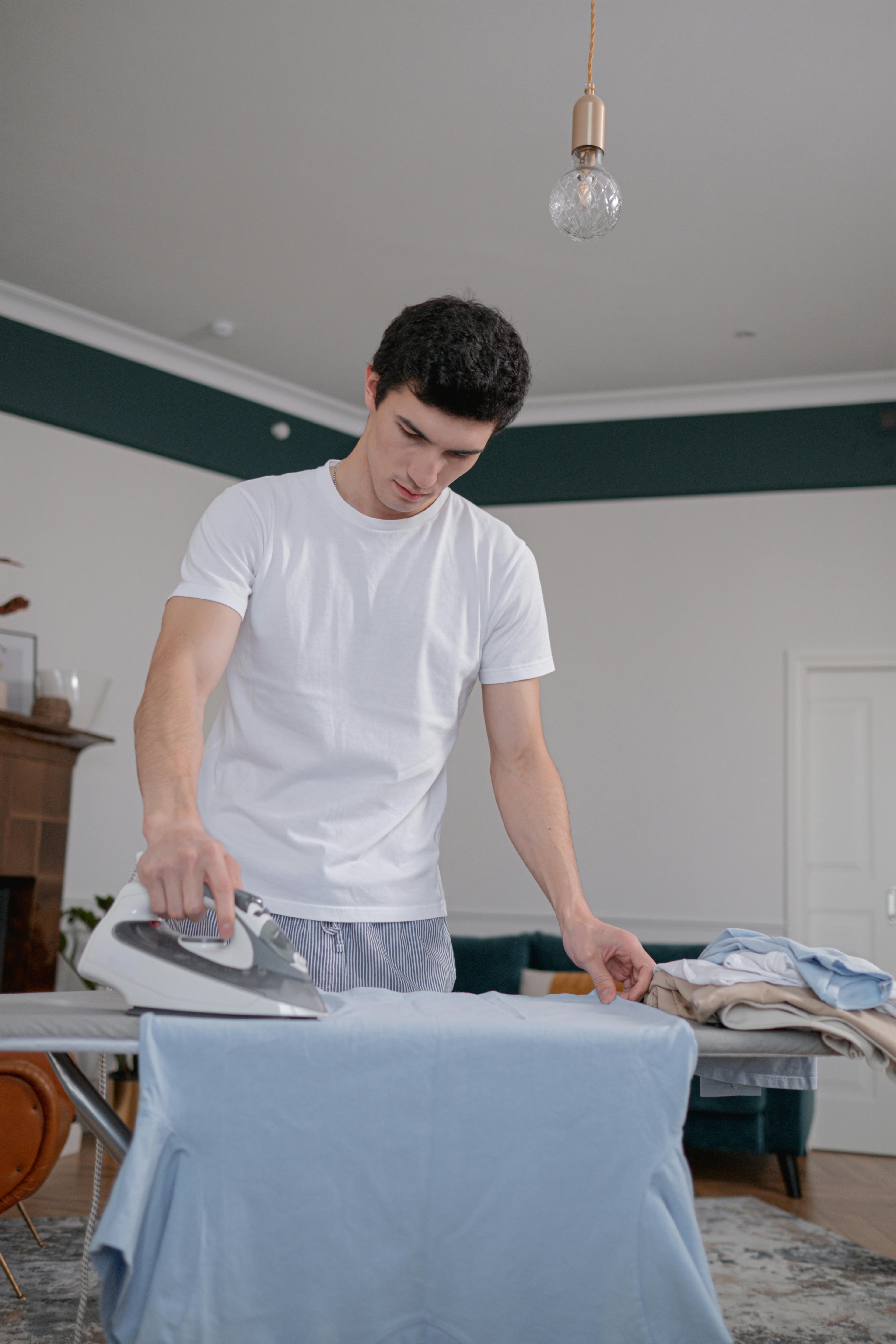
The kitchen has always been more than a place to cook. From ancient sacred hearths to modern open-plan spaces, it reflects changing social roles, gender dynamics, and family traditions. Today, legacy platforms help preserve these rich culinary histories and memories, ensuring that the true heart of the home is never lost to time.
Across history, the kitchen has operated as a vital social hearth, a technologically evolving workspace, and a gendered site of labor, emotional care, and cultural meaning. From prehistoric fires to the modern open-plan spaces, the area around the stove has been shaped by architectural innovation, economic shifts, and deep-seated ideologies about domestic roles.
Feminist critique and time-use research reveal that the kitchen has long functioned as a site of unequal domestic expectations. Yet many women have also reclaimed it as a place of creativity, resistance, and intergenerational connection. Today, while more men participate in cooking, persistent gender gaps in routine housework remain.
In this landscape, privacy-first legacy platforms like MyHeirloom offer new ways to turn kitchen memories, recipes, and stories into meaningful digital Keepsakes. This approach repositions the kitchen as a carefully curated core of family legacy, rather than a silent backdrop to gendered work.
The hearth and the home: Historical evolution of the kitchen as a social and architectural space
From communal fire to domestic hearth
Archaeological and anthropological research suggests that humanity’s control of fire—dating back several hundred thousand years—was foundational not only for nutrition and survival but also for social organization. Hearths discovered at prehistoric sites indicate that early cooking areas were central to shelters, providing heat, protection from predators, and a focal point for communal gathering.
The surrounding space functioned as a proto-kitchen, where food preparation, storytelling, and the negotiation of group relationships were intertwined. The act of cooking itself transformed raw food into culturally meaningful meals, establishing early patterns of shared eating that prefigure family dinners.
In many ancient societies, this central hearth acquired an explicitly symbolic and spiritual dimension. Classical Greek and Roman households venerated the hearth as sacred, tying domestic fire to divine protection and civic identity. In other cultures, kitchen fires came to represent hospitality and community, signaling that the home was open and socially alive.
The repeated association of hearth and sanctity indicates that the kitchen began as one of the world's first social spaces, where everyday survival and ritual practice overlapped. The characterization of the kitchen as the heart of the home is not a modern advertising slogan but a distillation of a long historical experience.
Over time, technological and architectural developments reshaped how this centrality was expressed. As domestic structures became more complex, the cooking area shifted from an open fire to defined hearth zones, bounded by walls and masonry. These changes altered ventilation and spatial hierarchy, marking an early tension between visibility and concealment.
Medieval chimneys and the gradual separation of the kitchen
By the Middle Ages in Europe, architectural innovation accelerated the differentiation of domestic space, and kitchens began to move away from the core living area. Chimneys replaced simple smoke holes, allowing more efficient smoke extraction and enabling larger, enclosed rooms dedicated to cooking.
In wealthier households, kitchens were often located in rear wings to keep heat, smells, and noise away from formal public rooms, marking the beginning of cooking as a segregated service activity. This design choice separated the kitchen from elite social interaction.
Despite this architectural separation, kitchens remained central to daily life. Large fireplaces in medieval kitchens provided warmth to servants and family members alike, and the provisioning of food required complex coordination of labor and seasonal planning.
As social hierarchies intensified, the people at the hearth were often servants rather than household heads, and their work was rendered largely invisible. This spatial placement of kitchens at the back or in basement areas reflected and reinforced the idea that food preparation was a lower-status activity.
This spatial concealment later intersected with gender norms. As household service became feminized, particularly in urban nineteenth-century contexts, the hidden kitchen became the routine workplace of women who were simultaneously indispensable and socially marginal.
Nineteenth-century domestic ideology and rationalized kitchen design
The nineteenth century witnessed profound shifts in economy and gender roles as agrarian livelihoods gave way to industrial wage labor. Middle-class families increasingly defined respectability through a domestic ideal where men left for public workplaces and women remained at home to manage household life.
The demise of agrarian economies replaced older family production models with a domestic management ideal that served as a key marker of class status. In this context, the kitchen emerged as a crucial stage upon which the meaning of womanhood was redefined.
Domestic advice manuals, magazines, and prescriptive literature portrayed the kitchen as both a workplace and a moral arena. Architectural attention turned increasingly to kitchen aesthetics, organization, lighting, and decoration, reinforcing the idea that a well-kept kitchen revealed a woman's character.
In the mid-nineteenth century, reformer Catharine Beecher proposed a rational layout that standardized worktop heights, improved lighting, and optimized workflows, introducing an early form of domestic time-and-motion study. Her work treated kitchen design with scientific seriousness.
Her ideas treated kitchen work as serious labor deserving of intelligent design, offering women a new sense of technical dignity. However, this rationalization also entrenched the idea that the kitchen was primarily a woman’s domain, tightly associating the space with female identity.
Twentieth-century modern kitchens: From Frankfurt to the open concept island
Rapid technological change in the late nineteenth and early twentieth centuries transformed kitchen equipment. The Industrial Revolution enabled mass production of stoves, refrigerators, sinks, and specialized tools, allowing more households to adopt mechanized cooking technologies.
With the introduction of running water, electricity, and mass-produced appliances, the kitchen evolved into one of the most technologically complex rooms in the house. This transition eased some physical labor while raising standards of domestic efficiency.
After World War I, the need for low-cost, mass-produced housing catalyzed a new wave of kitchen design that prioritized efficiency. In the mid-1920s, Austrian architect Margarete Schütte-Lihotzky designed the Frankfurt Kitchen, creating what is widely considered the foundation of the modern fitted kitchen.
The Frankfurt Kitchen brought together standardized cabinets, built-in storage, and carefully arranged workstations to minimize unnecessary movement, treating domestic cooking as an optimized process. This design treated domestic work as a form of labor that could be scientifically managed.
In the 1930s, architect Frank Lloyd Wright further reshaped the kitchen’s relationship to domestic space. In some of his residential projects, Wright integrated the kitchen into common areas through open floor plans, allowing cooking spaces to interact visually and socially with dining and living rooms.
The kitchen island became a physical anchor that blurred the boundary between work and sociability, challenging the practice of banishing heat and mess to hidden areas. This open-concept approach set the standard for popular modern home design.
Postwar decades saw rapid evolution of kitchen aesthetics and layouts, reflecting shifts in consumer culture and domestic technology. The 1950s popularized the fitted kitchen with uniform cabinetry and integrated appliances, marketed as symbols of modern efficiency and the ideal happy housewife.
Contemporary kitchens: Technological hub and social stage
In contemporary housing, the kitchen has migrated from the periphery to a central, open-plan position, visually connected to living spaces and laden with technology. Architects and designers describe it as the most technologically active room, hosting gathering, remote work, homework, and informal socializing.
While open-plan layouts appear to democratize domestic space by making cooking visible, they can also intensify pressure on primary cooks to maintain a perfect aesthetic under the gaze of others. This dual nature makes the contemporary kitchen both a social stage and a site of performance.
In addition, as digital devices permeate kitchens through recipe apps and smart speakers, the space becomes a node in broader information ecosystems. Meals are photographed, recipes saved to cloud drives, and family traditions documented in scattered digital formats.
Yet this abundance of digital traces does not automatically translate into a coherent, preserved legacy. Understanding the kitchen's contemporary role requires tracing not only architectural evolution but also the gendered division of labor that still defines who stands at the stove.
Gendered division of domestic labor: Women at the stove
Separate spheres and the feminization of domestic work
Modern social science has long emphasized that the division between public and private spheres under industrial capitalism was deeply gendered. Productive and remunerated work outside the home was associated with men, while unpaid domestic and reproductive labor inside was associated with women.
This gendered division of labor relegated women’s work to unpaid but indispensable tasks, establishing routine food preparation as a primary female responsibility regardless of professional status. This structure framed the kitchen as a naturalized space of female obligation.
From a critical perspective, this domestic labor is not merely a family service but part of a systematically organized system of economic value. Capitalism has historically depended on women’s unpaid labor to maintain and reproduce the workforce without direct cost to employers.
In nineteenth-century North America, this was reflected in the rise of domestic ideology that equated womanhood with the design and maintenance of the home. The kitchen became both a workplace and an ideological instrument that kept women tethered to unpaid domestic responsibilities.
Store your most cherished memories and heritage safely on Heirloom.
Preserve our memoriesDomestic servants and enslaved women: Invisible labor at the hearth
While middle-class ideologies positioned white women as domestic managers, the actual work of cooking in many households was performed by servants and enslaved women. In nineteenth-century contexts, including prominent American educational institutions, women performed domestic labor that was essential but socially undervalued.
The uncompensated labor of enslaved women and domestic servants highlights how the kitchen functioned as a site of racialized and class-based exploitation. This history complicates any nostalgic vision of the kitchen as a purely warm, familial space.
Similarly, in urban nineteenth-century households, domestic servants took on the bulk of kitchen work under demanding conditions. Their presence shows that women at the stove were not a single, homogeneous group, but rather functioned within intersecting lines of class, race, and gender.
The postwar happy housewife and the domestic ideal
The mid-twentieth century witnessed a powerful resurgence of domestic ideology centered on the figure of the happy housewife. Marketing efforts during this period sold the idea that a woman should be efficient, make food from scratch, keep the house clean, and make it all look effortless.
Postwar marketing positioned the kitchen as the ultimate stage for female fulfillment, masking the physical and emotional demands of housewifery under the guise of modern convenience. This ideal strongly discouraged women from seeking careers outside the home.
This postwar domestic ideal was later critiqued by feminist writers like Betty Friedan, who wrote that kitchens were once again the center of women’s lives. Decades earlier, Simone de Beauvoir had already noted the limitations placed on women confined to what she termed the kitchen-jail.
The second shift: Paid work and persistent domestic responsibilities
Despite growing female participation in paid labor in the late twentieth century, the gendered division of domestic work has proved remarkably resilient. Sociologists famously describe how women perform a second shift of cleaning, cooking, and childcare after their paid jobs, while men enjoy more leisure time.
Even in highly professional spheres, partnered women often perform a disproportionate share of routine domestic tasks, proving that career achievements do not automatically result in household equality. This disparity is particularly evident in daily meal planning and preparation.
Domestic foodwork has been recognized as multidimensional, containing deep emotional aspects. Sociological studies show that mothers are often expected not only to prepare food but also to manage the emotional atmosphere at the table, comforting family members and smoothing over conflicts.
In this context, the kitchen and dining table are sites where women’s labor extends into the realm of emotional care, reinforcing the kitchen’s status as a complex nexus of work, care, and identity.
Feminist critique and reclamation: The kitchen in theory, art, and literature
The kitchen as prison and domestic slavery
Against the backdrop of persistent gendered expectations, feminist theorists and artists have frequently characterized the kitchen as a space of confinement. Critical analysis portrays the kitchen as a prison for women, documenting the exploitation of their labor and the restriction of their personal dreams.
Feminist critiques argue that the naturalization of domestic work as a labor of love serves to obscure its systemic economic function. Consequently, the kitchen is analyzed not just as a domestic space, but as an economic engine powered by unpaid work.
Simone de Beauvoir famously articulated this confinement when she described the kitchen-jail as a space that circumscribed a woman's movements and flattened her identity. This image underscores how everyday physical confinement in domestic spaces can limit intellectual and personal development.
Feminist art and the kitchen as a site of critique
The kitchen’s symbolic power made it a natural subject for feminist artists working in the late twentieth century. Performance works used the domestic cooking environment to critique the repetitive and constraining nature of women’s kitchen work, depicting subjects emotionally emptied by routine.
By turning the everyday tools of cooking and cleaning into subjects of performance and visual art, feminist creators made the invisible toll of domestic labor visible to the public. These artistic interventions challenged the normalization of the housewife role.
At the same time, some feminist artists, particularly women of color, have offered more nuanced depictions. They acknowledge both the kitchen’s confining legacy and its potential for cultural resistance, creativity, and community building.
Second-wave feminism and the politics of culinary labor
Second-wave feminist movements of the late 1960s and 1970s placed domestic labor, including cooking, at the center of their critique of gender inequality. Many activists argued that the social expectation to cook was a fundamental tenet of women’s oppression.
Activists and theorists challenged the notion that technological progress alone would liberate women, pointing out that new appliances often merely raised the standards of domestic labor. True liberation required a political reorganization of household work.
Liberal feminists proposed culinary strategies aligned with their political goals, advising fast, convenient meals to give women more time for careers and political involvement. They also advocated that men should share cooking duties to ease women’s domestic burdens.
Feminist artists engaged with food culture to challenge the feminization of culinary labor, interrogating cooking classes and cookbooks as mechanisms that reinforced gender norms. By foregrounding food preparation in experimental art, they offered a challenge to the ideological construction of housework.
Reclaiming the kitchen: Creativity, resistance, and cultural perspectives
Although second-wave feminism often rejected the kitchen as a symbol of oppression, subsequent feminist currents, especially those rooted in women-of-color traditions, have advanced a more transformative vision. Many writers portray the kitchen as a positive sphere of inspiration and creativity.
By reclaiming the kitchen as a site of power, diverse writers and artists have transformed the stove from a symbol of domestic confinement into a tool of cultural preservation and resistance. In this view, preparing traditional food becomes a deeply political act of identity.
In contemporary poetry, cooking appears as a tool of self-expression and healing, with the kitchen becoming a space of creativity and subversive pleasure. Some writers depict a hijacking of the kitchen, turning it into a writing room where texts are created instead of dishes.
This reclamation does not erase the history of exploitation but shows that the heart of the home can be reimagined. Food functions not simply as sustenance but as a medium for personal empowerment, a way of inscribing memories and narratives into everyday practice.
Contemporary patterns of cooking and housework: Evidence from time-use research
Time-use studies and the shrinking, yet persistent, gender gap
Large-scale time-use studies provide quantitative evidence about who is in the kitchen today and how gender patterns in housework are changing. Analysis of households shows that the traditional gendered division of labor is eroding but has not disappeared.
While modern couples express more egalitarian attitudes, quantitative data shows that wives still perform the majority of routine daily chores, maintaining a significant gender gap in domestic labor. The division of labor remains structured along traditional lines.
Further research reveals that the historically large gender gap in total housework time narrowed over the last two decades. This convergence was particularly pronounced in traditionally feminine core housework, such as cooking and laundry, where the gap decreased by about forty percent among married individuals.
The reduction was driven largely by married men’s increasing involvement in cooking. Yet, even with these changes, women continue to do significantly more housework than men, and domestic labor remains divided along traditional gender lines.
Participation versus duration: More people in the kitchen, same minutes for women
Recent analyses of time-use data emphasize the importance of distinguishing between participation in cooking and the duration of cooking among those who cook. While the share of Americans doing food preparation has risen, the average time spent by those who cook has not changed significantly.
Two decades of social change have added more men to the kitchen without subtracting minutes from women's cooking time, leaving a substantial gender gap in everyday culinary labor. The division of labor has shifted in participation but not in overall duration.
These findings suggest that while the kitchen is increasingly populated by men, women’s long-standing role as primary cooks persists. The gender convergence in core housework has been concentrated in tasks like housecleaning and laundry, but cooking remains a domain where differences endure.
Gender display and breadwinner wives
The persistence of gender differences in cooking and cleaning, even when women are primary earners, has been interpreted through the lens of gender display. Studies show that women’s participation in routine tasks reflects traditional performance expectations.
In households where women are the primary financial earners, some wives perform extra domestic work to neutralize their non-traditional economic role and align with traditional gender expectations. This behavior highlights the deep symbolic power of the kitchen as a site of identity performance.
Men, by contrast, show non-normative gender behavior in cooking and cleaning, increasing their participation in tasks traditionally coded feminine, but they continue to maintain higher participation in home maintenance tasks aligned with masculine norms.
Housework trajectories across the life course and the impact of parenting
Longitudinal studies tracking housework trajectories from early adulthood into midlife illuminate how cooking and related tasks evolve over time. Research reveals that women contribute more to all housework tasks than men in early adulthood, and this gender gap is maintained through midlife.
Parenthood consistently widens the domestic gender gap, reinforcing women's roles as primary caregivers and routine food providers when children enter the household. This shift often overrides previous, more egalitarian arrangements.
Taken together, time-use studies and longitudinal research paint a complex picture of change and continuity. More men are entering the kitchen and participating in cooking, yet women continue to carry a heavier load of both physical and emotional labor in maintaining the home.
The kitchen as the heart of the home today: Memory, emotion, and intergenerational bonds
Symbolic meanings of the kitchen across cultures
Across diverse cultural traditions, the kitchen or hearth has long been associated with meanings that go beyond its practical function. In ancient societies, the hearth was sacred, tied to household protection, while in other cultures, the fire represented hospitality and community.
The architectural shift to open-plan living has transformed the kitchen into a visible social crossroads, yet this design also makes the labor of cooking highly visible. This visibility can increase the pressure on cooks to perform emotional and social hospitality.
Create a digital legacy that your children and grandchildren will be proud of.
Create a family legacyHowever, as critical analyses remind us, this metaphor can obscure the labor that makes the heart beat. To celebrate the kitchen as the heart of the home recognizes its centrality but does not necessarily acknowledge who tends that heart or how their efforts are distributed.
Family recipes, cultural identity, and the transmission of tradition
One of the most tangible ways in which the kitchen functions as the heart of the home is through family recipes and culinary traditions. Recipes embody not only instructions for food preparation but also stories about where ingredients come from, how dishes evolved, and what they mean.
Because women's historical contributions to culinary culture have often been undocumented, the loss of family recipes represents a direct loss of women's creative and emotional legacy. Preserving these culinary threads is vital for maintaining intergenerational identity.
The kitchen, as the place where recipes are enacted, becomes a site of memory work. Both women and men keep cultural threads alive through everyday practice, ensuring that unique family flavors and techniques are not lost to time.
Emotion work, care, and the happy family meal
The act of feeding the family is not only physical labor but also emotional and relational work. Sociological studies of family meals explore how expectations that dinners should be happy, harmonious experiences influence mealtimes.
Mothers frequently bear the primary responsibility for the emotional and mental coordination of mealtimes, managing preferences, dietary needs, and interpersonal dynamics. This emotional labor can turn mealtimes into a source of stress rather than relaxation.
The happy family meal ideology can therefore be both aspirational and burdensome, making the kitchen a space where care is enacted, sometimes at the expense of the cook's own well-being. Recognizing this emotional labor is essential for any effort to redistribute domestic work.
Digital fragmentation and the fate of kitchen memories
The contemporary digital environment adds another layer of complexity to the kitchen’s role as a memory space. Many families now document cooking and meals through smartphones and social media, taking pictures of dishes and sharing recipes via text messages.
Without deliberate organization, ordinary digital storage systems like generic cloud folders fail to preserve the stories, relationships, and context behind family kitchen photos. This fragmentation puts unique culinary legacies at risk of becoming digital noise.
This reality underscores a key distinction: it is not enough to store something; preserving a legacy requires adding meaning and relational information. The kitchen's stories must be captured alongside images and recipes if future generations are to understand their significance.
From stove to server: Digital legacy platforms and the transformation of kitchen memory
Why kitchen memories need deliberate preservation
Given the centrality of the kitchen in family life, the risk that its memories might fade or fragment is significant. Recipes and stories of meals carry information about migration, economic adaptation, love, and care, showing how domestic roles changed across generations.
The transition from analogue to digital has exacerbated this risk. Handwritten recipe cards are tangible objects that invite storytelling, whereas digital files can be easily deleted, mislabeled, or buried in vast data archives without narrative structure.
Historically, women’s domestic labor has been undervalued and rarely documented in detail, making the preservation of their recipes and kitchen stories a vital act of historical recovery. Digital legacy platforms help make this quiet history visible.
Preserving the history of the kitchen therefore requires not only recording dishes and events but also acknowledging who performed the work and how their roles changed. Digital platforms can help families turn scattered memories into structured archives.
MyHeirloom’s Legacy Room and Keepsakes: Structuring kitchen stories
MyHeirloom, a privacy-first digital platform for personal and family legacy, addresses these challenges by providing a structured space called the Legacy Room. Within this environment, users can organize their life stories, media, documents, and relationships.
In MyHeirloom, a beloved family recipe can be documented as a Keepsake that integrates original handwritten cards, photographs of the prepared dish, and audio recordings of an elder explaining the technique. This multi-dimensional preservation keeps the story intact.
The Life Timeline visualizes dated Keepsakes chronologically, charting how domestic roles changed over time. Early entries might show one person carrying most cooking responsibilities, while later entries depict joint efforts, providing concrete evidence of social change.
MyHeirloom also offers Weaver, an AI-based guide that helps users reflect on memories and develop storytelling structure. Weaver prompts users to recall sensory details, emotional moments, and relational dynamics, helping them articulate experiences that might otherwise remain untold.
Family Cookbook: Preserving culinary heritage with context
Recognizing the importance of recipes, MyHeirloom includes a dedicated Family Cookbook feature. Unlike generic recipe apps that focus solely on ingredients, the Family Cookbook is designed to preserve recipes alongside the emotional and cultural context that makes them meaningful.
The Family Cookbook integrates with the Legacy Room to connect specific recipes directly to major family milestones and historical narratives. This ensures that recipes remain embedded in the life stories of those who cooked them, rather than becoming isolated instructions.
Entries can also capture stories of culinary resistance, such as women who used cooking to maintain cultural identity in the face of assimilation pressures. This structure helps ensure that family recipes maintain their narrative richness over time.
My Tribe and Family Tree: Mapping relationships around the table
The kitchen’s role as the heart of the home is inseparable from the relationships that converge there. MyHeirloom’s My Tribe feature allows users to create profiles for important people in their lives, including family members, friends, and mentors.
Linking kitchen-related Keepsakes and recipes to specific profiles in My Tribe and the Family Tree makes the generational transmission of culinary traditions immediately visible. This mapping shows how domestic norms shifted from grandparents to children.
This relational mapping aligns with insights about the kitchen as both a labor-intensive and potentially empowering space. By tying kitchen stories to specific people, MyHeirloom supports a more holistic understanding of the heart of the home.
DocuVault: The practical side of domestic life
While the emotional and narrative dimensions of kitchen work are crucial, domestic life also involves practical information. MyHeirloom’s DocuVault feature provides a secure, organized space for important and sensitive documents, such as property information, medical records, and personal instructions.
By keeping sensitive health profiles, dietary restrictions, and caregiving instructions in the secure DocuVault, families ensure that essential practical knowledge is preserved for future caretakers. This secure repository complements the emotional narrative of the Legacy Room.
Separating narrative Keepsakes from secure DocuVault contents reflects an important distinction: some aspects of kitchen life are meant to be shared broadly, while others are more appropriately limited to close family, respecting both privacy and continuity.
Trusteeship and Patron Accounts: Sustaining the kitchen’s heart across generations
MyHeirloom’s approach to intergenerational continuity includes Trusteeship, whereby a user can designate trusted individuals to assume responsibilities for their Legacy Room. This design helps ensure that kitchen histories and recipes remain accessible and intact, rather than disappearing when an account owner passes away.
Whether curating a dedicated digital archive for a grandmother known for her cooking or documenting a child's evolving domestic skills, Patron Accounts allow families to highlight individual legacies. These tools ensure that the stories of the stove are passed down intact.
Importantly, MyHeirloom positions itself not as a replacement for legal or financial services, but as a thoughtful, secure platform for organizing memories, relationships, and important information. It recognizes that the home is both emotionally rich and practically complex, requiring tools that respect privacy.
If you are ready to preserve your family's unique culinary heritage and stories, you can explore MyHeirloom today. Start for free and begin building your own Legacy Room to protect the memories that define your home.
The kitchen’s past and future as the heart of home and legacy
The history of the kitchen reveals a space that has been continuously reshaped by technological innovation, architectural design, and shifting gender norms. From prehistoric hearths to modern open-plan layouts, the kitchen has operated as a social hub, a site of care, and an engine of daily life.
While the kitchen has historically been a site of unequal expectations and unpaid domestic labor, it has also emerged as a powerful space of cultural resistance, personal expression, and artistic reclamation. This complex legacy continues to shape contemporary homes.
Contemporary time-use research shows partial change, with more men participating in cooking, though women still carry a heavier load of physical and emotional housework. In the digital age, this multifaceted kitchen experience generates abundant data that is often scattered and vulnerable to loss.
By elevating kitchen memories into deliberate Keepsakes, MyHeirloom invites families to recognize and honor the everyday work, creativity, and care that make the heart of the home beat. This structured preservation ensures that no culinary thread is lost to time.
As gender roles at the stove continue to evolve, the challenge is to ensure that domestic changes result in more equitable and meaningful distributions of both labor and memory. Documenting these stories protects the quiet histories that define our homes, securing them for generations to come.

MyHeirloom gives you a dedicated Legacy Room—a private, secure space to collect photos, videos, documents, and stories.
Start now for free