
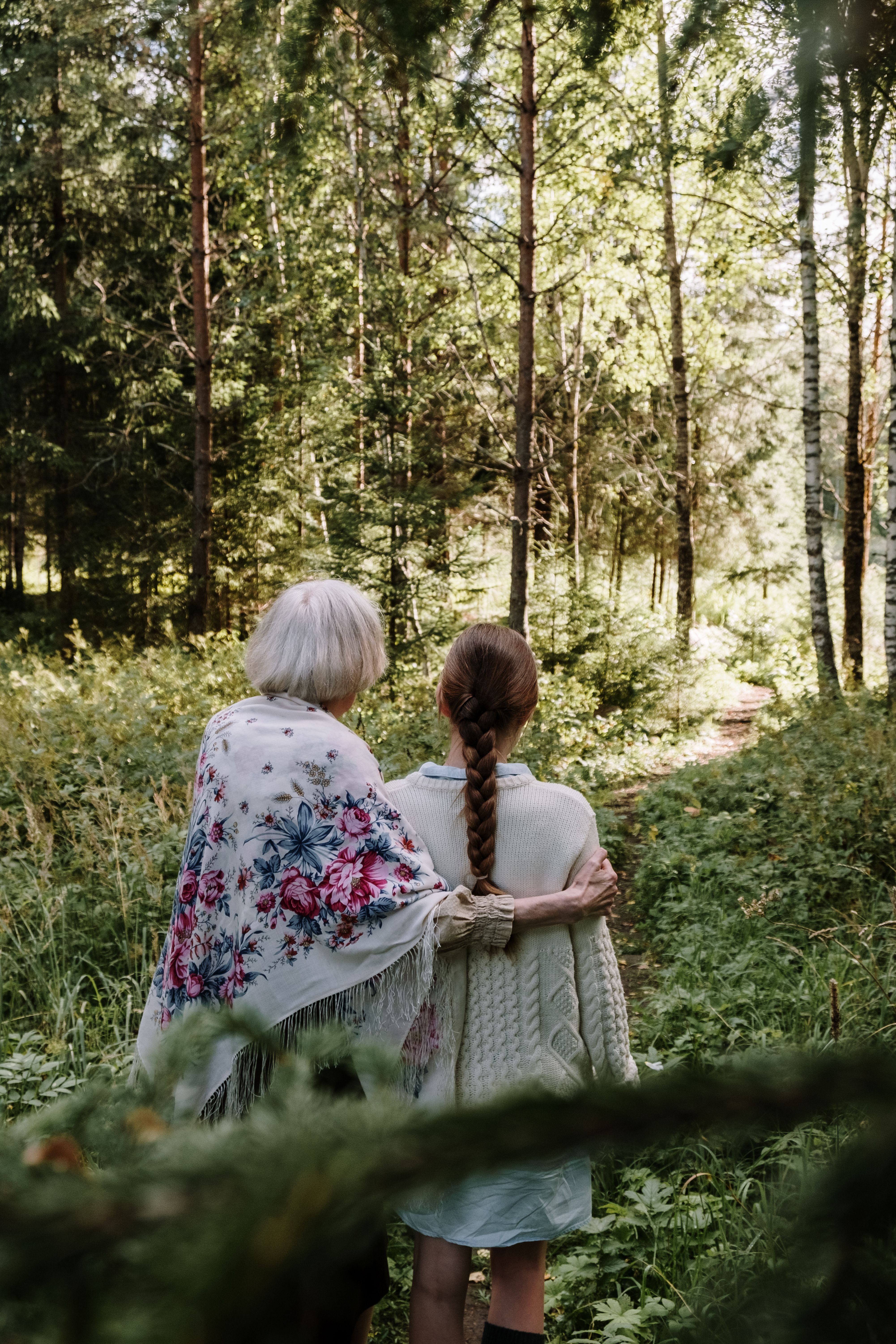
A visual family tree can help people explore identity, belonging, and legacy by connecting family relationships with stories, cultural heritage, memories, and important personal records.
Understanding who we are is one of life’s most enduring questions. Our sense of self is deeply linked to family history, heritage, and the stories through which we understand our place in the world.
Visual family trees offer more than genealogical curiosity. When combined with stories and personal archives, they can transform names and dates into a living legacy that supports resilience, mental well-being, and intergenerational connection.
The question “Who am I, really?” may surface at any stage of life. Psychological theories of identity suggest that a stable sense of self emerges from relationships, cultural background, and the stories through which we make sense of our lives.
Family is often the first context in which these stories take shape. It influences how we understand our origins, values, and place in the world. Yet many people reach adulthood with only fragmentary knowledge of their family history.
Interest in genealogy has grown as online archives and DNA testing have become more accessible. For many people, this interest reflects a deeper desire to connect individual life to something larger and to feel rooted in time and lineage.
A visual family tree turns invisible relationships into a clear map of connection. It helps people see themselves not as isolated individuals, but as part of a longer line of lives, choices, migrations, traditions, and relationships.
Research has documented an association between knowledge of family history and well-being, especially among young people. Youth who know more about their family’s past tend to show higher self-esteem, lower anxiety and depression, and a stronger sense of meaning and purpose.
A central theme is that a family tree alone, understood narrowly as names and dates, is not enough to answer life’s biggest question. It becomes more meaningful when visual lineage is combined with stories, cultural heritage, personal memories, and thoughtfully preserved documents.
Identity can be understood as the internalized answer to questions such as “Who am I?”, “Where do I come from?”, and “What do I value?” It gives people a sense of continuity over time.
Narrative psychology suggests that we construct our identities through stories. We organize life events into a narrative that provides coherence, significance, and purpose.
These three elements are especially relevant to family history. Coherence is supported when people can situate their own experiences against a backdrop of family events. Significance is reinforced when they see themselves as part of a larger lineage. Purpose can be shaped by values and examples passed down across generations.
A visual family tree provides a structure within which family stories can be anchored. It helps connect personal memories to relationships, places, and events across time.
Family as a primary context of selfhood
Family is one of the most powerful contexts for identity formation. It shapes early experience, but it also provides ongoing roles that carry expectations, meanings, and responsibilities.
Supportive family ties are associated with better psychological and social outcomes, while conflictual relationships can increase distress. Parenting behaviors, family environment, and a sense of belonging all influence identity development.
Family systems psychology also emphasizes how patterns of behavior and emotional response can be passed down through generations. Families transmit not only genetic material, but also ways of dealing with conflict, expectations around independence, and ideas about care.
A family tree, especially when constructed as a genogram, can help visualize these patterns. By mapping relationships, major events, and recurring dynamics, people can begin to see themselves as part of a longer process.
Cultural heritage and the intergenerational self
Beyond immediate family, cultural heritage provides another layer of identity. Heritage includes values, traditions, languages, rituals, food, memories, and artifacts passed down by previous generations.
Knowledge of cultural background can support a positive sense of self, social solidarity, and resilience. Disconnection from cultural roots may contribute to loneliness, uncertainty, or a weakened sense of belonging.
The idea of the intergenerational self captures how seeing one’s life as part of a longer family line can strengthen resilience and perspective. Knowing that previous generations faced challenges and survived can make present difficulties feel more bearable.
A visual family tree provides a framework within which this intergenerational self can be imagined, explored, and strengthened.
In many traditional societies, family trees have served as vital cultural instruments. They preserved history, clarified social roles, supported inheritance systems, and helped communities understand kinship and belonging.
The significance of family trees often extended beyond the nuclear family. Genealogical records helped people understand extended kin networks, obligations, alliances, and shared heritage.
In some cultures, genealogies were maintained orally. In others, they were recorded in written registers. Across these different forms, the core function remained consistent: connecting individuals to a shared past and guiding the transmission of knowledge and values.
What is a visual family tree?
A visual family tree is a diagram that represents individuals and their relationships across generations. In its simplest form, it begins with a focal person and maps parents, grandparents, siblings, children, and other relatives.
Tools for building visual family trees range from pencil and paper to software and dedicated digital platforms. Digital tools can allow users to add names, dates, places, photos, stories, and documents.
A genogram is a specific type of visual family tree used in clinical and psychological contexts. It includes additional information about relationship quality, health issues, and significant life events.
The visual nature of a family tree is essential. It externalizes what might otherwise remain vague or implicit, making family connections concrete and allowing patterns to be seen at a glance.
Heritage, legacy, and generational continuity
While a family tree focuses on relationships and descent, the broader ideas of heritage and legacy include values, traditions, stories, and material artifacts passed across generations.
Heritage includes tangible elements, such as heirlooms and documents, as well as intangible elements, such as shared memories and family customs. Legacy also connects to the desire to contribute to future generations.
Writing life stories, preserving family recipes, or creating a digital legacy archive can be ways for people to express generativity. A structured family tree linked to stories and media can help ensure that personal experiences are not lost.
Family trees in the digital era
In the digital age, genealogy has become more accessible. Online platforms allow people to search records, collaborate with relatives, and explore family connections.
At the same time, digital life has created new challenges. Families now generate large volumes of photos, videos, messages, and documents scattered across devices and cloud drives, often without clear organization or context.
Without context, the meaning of a photo, document, or memory can quickly be lost. This creates a need for platforms that support storytelling, secure preservation, and meaningful organization.
Digital family trees can play a central role in this ecosystem. When integrated with stories, timelines, and document archives, they can help transform fragmented digital traces into a coherent legacy.
Platforms like MyHeirloom combine a Family Tree with features such as My Tribe, Keepsakes, Life Timeline, Family Cookbook, and DocuVault, all organized within a user’s Legacy Room. In this kind of system, a visual Family Tree is not isolated; it interacts with stories, photos, relationships, and documents.
Researchers have studied how knowledge of family history relates to psychological outcomes in young people. One commonly used approach asks children about specific details of their parents’ and grandparents’ lives.
Studies using this approach have found that young people with higher levels of family knowledge tend to show higher self-esteem, better emotional resilience, and lower levels of anxiety and depression.
These associations appear especially relevant during stressful events. Family narratives may help young people feel part of a larger story of survival, giving them perspective and coping resources.
The stories that seem to matter most are not only stories of achievement. Stories that include both struggles and recovery can show that families endure difficulty and adapt.
These findings do not prove that simply knowing family facts causes better mental health. The relationship is likely complex. Still, they suggest that family storytelling can be a valuable part of promoting well-being.
Adolescent identity development and family history
Adolescence is a critical period for identity formation. Research suggests that family history knowledge may help adolescents balance autonomy with belonging.
Young people who know more about their family’s past may find it easier to explore who they are while still feeling connected to a larger intergenerational context.
Family history knowledge appears most beneficial when it emerges from supportive relationships and respects the young person’s agency. A Family Tree used as an open framework can encourage questions, reflection, and personal interpretation.
Family functioning, belonging, and identity
Family history knowledge operates within the broader context of family functioning. Supportive and cohesive families tend to foster healthier identity development.
Belonging means feeling recognized, accepted, and valued as part of a group. Visual family trees can make belonging more concrete by showing a person’s place within a wider network of kin.
For older adults, sharing stories, traditions, and values can support generativity and identity affirmation. Tools that facilitate intergenerational storytelling can therefore benefit both younger and older family members.
Create a digital legacy that your children and grandchildren will be proud of.
Create a family legacyCultural identity, heritage, and mental health
Family history is also embedded in cultural history. Knowledge of cultural roots can support mental health, especially in communities where history, migration, or displacement have shaped identity.
Digital tools can sometimes support reconnection by revealing ancestral origins or identifying extended kin. However, they should be approached thoughtfully and critically.
Visual family trees that include biological, social, and cultural connections can provide a more accurate picture of how identity is actually formed.
One of the most basic functions of a visual family tree is to externalize information that might otherwise remain scattered or implicit. Gathering and organizing this information turns it into a visible structure.
Visual representation also makes patterns easier to see. When names, occupations, migrations, losses, relationships, or repeated events are mapped across generations, recurring themes become clearer.
Seeing these patterns can prompt reflection on how much of one’s identity feels inherited and how much feels chosen. This does not mean family history determines a person’s future, but it can reveal meaningful influences.
Family systems approaches use genograms for this purpose. By mapping patterns across generations, people can contextualize personal struggles and consider alternative paths.
Supporting narrative coherence, significance, and purpose
Visual family trees do more than display facts. They provide a scaffold for storytelling.
Each name can become the starting point for a story. Each relationship can invite questions about influence, care, conflict, migration, loss, resilience, or belonging.
A family tree contributes to coherence by showing how individuals are linked across time. It contributes to significance by showing that one’s life is part of a line of people whose existence mattered enough to be remembered.
It can also contribute to purpose when ancestral stories inspire present-day commitments. In this sense, the family tree is less an endpoint and more a living document.
Framing identity challenges through the family tree
People often turn to the question “Who am I, really?” at moments of transition, grief, uncertainty, or crisis. During such times, a visual family tree can help situate present questions within longer arcs.
These uses show that the identity function of a family tree is not only informational. It is reflective, emotional, and narrative.
The importance of including stories, not just names
Genealogists and legacy writers often warn against collecting ancestors without collecting stories. Names and dates can be fascinating, but without context they offer limited insight into identity.
Family stories build meaning because they show how ordinary lives were lived. They preserve values, choices, humor, hardship, love, mistakes, and resilience.
A visual family tree becomes far more meaningful when each name connects to at least one story. This is where digital platforms that link tree profiles to multimedia stories can be especially valuable.
A practical starting point is home. Begin with yourself and immediate family, then add parents, siblings, grandparents, children, and other known relatives.
Existing materials can help. Certificates, letters, photographs, recipes, family Bibles, diaries, and old documents may all provide clues. These items can also trigger memories and stories.
Conversations with older relatives are especially valuable. Intergenerational knowledge is often held in memory, and oral storytelling can preserve details that documents never capture.
Approach these conversations as collaborative storytelling rather than interrogation. Questions can explore childhood homes, family traditions, food memories, hardships, values, migrations, work, relationships, and funny moments.
Visual aids can help unlock memories. Old photographs, handwritten notes, and rough family tree sketches often prompt richer recollections.
Integrating documentary and digital research
Once a basic tree is outlined, formal records can be used to verify and expand it. These may include civil registration records, church records, census data, immigration documents, and other archives.
Online genealogy platforms can accelerate research, but they should be used critically. Suggested record matches may be helpful, but they still need verification.
DNA testing is another avenue some people use to explore ancestry. It can identify genetic relatives and estimate ancestral origins, but it can also uncover unexpected relationships and sensitive information.
The choice of tool should be guided by the user’s goals. Some people want a simple visual map. Others want a collaborative, story-rich, secure legacy archive.
Common mistakes and how to avoid them
A common mistake is treating genealogy as a race to accumulate as many ancestors as possible. For identity work, depth often matters more than breadth.
Another mistake is focusing only on biological descent and ignoring non-biological relationships that were central in a person’s life. Caregivers, mentors, stepparents, close friends, and chosen family can all shape identity.
A third pitfall is avoiding painful history by omitting difficult relatives or events. Discretion and privacy matter, but complete erasure can perpetuate secrecy.
People also sometimes rely too heavily on a single digital platform without considering backups, privacy, and long-term access. Best practice involves clear privacy settings, regular backups, and careful control over sensitive information.
Finally, genealogy should not be expected to answer every question of identity. It helps situate a person, but it does not define them completely.
1. Is a cloud folder enough to preserve family history?
Storing photos and documents in a cloud folder is better than leaving them on one device, but it is rarely enough to preserve family history in a way that supports identity. Without organization and context, future viewers may not know what they are seeing. A visual Family Tree linked to curated stories and labeled media provides structure and meaning.
2. What is the difference between storing files and preserving a legacy?
Storing files is primarily a technical act. Preserving a legacy means adding context, narrative, and intention so future generations can understand not only what something is, but why it mattered. A legacy-oriented approach uses tools such as family trees, timelines, and story prompts to connect scattered materials into a coherent picture of a life and family.
3. How can I record memories without writing a full memoir?
You can preserve identity and legacy through smaller, focused contributions. A visual Family Tree offers natural prompts: choose a person on the tree and write a Keepsake about a favorite memory, turning point, or shared tradition. Features such as Keepsakes and Weaver can help users create short, manageable entries over time.
Modern families generate vast amounts of digital content: smartphone photos, messages, social media posts, emails, videos, and digital documents.
While this creates new opportunities for recording daily life, it also creates fragmentation. Memories become scattered across devices, apps, cloud services, and inboxes, often with little organization or explanation.
When memories are scattered, families may end up with thousands of photos but few meaningful stories. Without deliberate curation, photos can become just files.
Traditional archival advice emphasizes stable storage, clear labeling, and regular maintenance. These principles also apply to digital memory preservation through backups, metadata, naming systems, and privacy controls.
From simple storage to meaningful digital legacy
Preserving a legacy requires more than generic cloud storage. It requires curation, contextualization, and linking.
Scanning old photographs should ideally include captions, dates, locations, and names. Recording elders’ stories should include consent, safe storage, and links to relevant people, places, or events.
Over time, these efforts can create a richly interwoven archive. The goal is not just to accumulate material, but to make it understandable and meaningful.
Digital legacy platforms and integrated family trees
Digital legacy platforms, including MyHeirloom, respond to the gap between simple file storage and meaningful legacy preservation.
MyHeirloom organizes content in a central Legacy Room with features such as Keepsakes, My Tribe, Family Tree, Life Timeline, Family Cookbook, and DocuVault. Rather than functioning as a generic cloud drive, it acts as a structured space for personal and family legacy.
In this kind of platform, the Family Tree can be linked to stories, photos, documents, and dates. My Tribe can capture non-genealogical relationships, while the Life Timeline can organize memories chronologically.
Privacy and security are central. Sensitive information should be protected through user-controlled visibility, careful sharing, and secure storage.
By bringing these elements together, a digital legacy platform can help people turn scattered memories, relationships, and important information into an organized, secure, and meaningful legacy.
Family history work can uncover painful or disturbing information. Many families carry legacies of trauma, secrecy, rupture, or conflict.
When these histories come to light, they can be emotionally destabilizing. A family tree or genogram can help make patterns visible, but difficult discoveries may require care, support, and boundaries.
A person may inherit patterns, but they are not bound to repeat them. Facing hard histories with compassion and context can help transform shame into understanding.
Digital legacy platforms must navigate these complexities carefully. They can provide tools for preserving stories and documents, but users need privacy controls and the ability to decide what to share.
Unknown parentage, adoption, and incomplete records
Another challenge arises when family information is missing or ambiguous. Adoptees and others may have large gaps in genealogical knowledge.
In such cases, the family tree should be drawn with humility and flexibility. It may need to represent genetic, adoptive, gestational, and social parentage.
Incomplete records are also common, especially where migration, displacement, discrimination, or historical disruption affected recordkeeping. Some questions may remain unanswered.
When records are missing, broader community histories, oral traditions, and meaningful non-biological relationships may still provide identity and connection.
Give them the home they deserve. Bring your family legacy into the digital age.
Start archivingPrivacy, consent, and digital ethics
As genealogy and legacy preservation have moved online, privacy has become increasingly important. Posting family trees or stories publicly may expose sensitive information about living relatives.
DNA testing raises additional issues because one person’s choice can reveal information about others. Users must consider not only their own preferences, but also the rights and wishes of family members.
In practice, sensitive information may be better preserved in a private Legacy Room than on a public family tree. Platforms that keep content private by default and allow granular sharing can support more ethical preservation.
The limits of genealogy for self-knowledge
Genealogy can enrich identity, but it does not determine personality or destiny. A family tree is a map of influences and relationships, not a blueprint for who someone must become.
Treating genealogy as destiny can be harmful. Over-identifying with admired ancestors can also create unrealistic expectations.
The healthiest approach is to see genealogy as one important thread in the larger tapestry of selfhood. Identity is always more than ancestry.
Writing one’s life story is both a form of self-examination and a gift to others. Memoir practices often begin by identifying key turning points and writing them as scenes with sensory detail and emotional depth.
A visual family tree can serve as a scaffold for this process. Each branch can suggest topics: childhood, migration, family rituals, grandparents, losses, turning points, and inherited values.
By reviewing life stories in light of family patterns, people can identify ways they have continued, adapted, or resisted family scripts. Digital tools such as Keepsakes and Weaver can support this process through prompts and structured entries.
Family storytelling, rituals, and recipes
Family storytelling is a collective practice that can strengthen bonds and transmit values. Visual family trees can be used as conversation pieces during family gatherings or intergenerational projects.
Family rituals and recipes are powerful carriers of memory and identity. Food memories, in particular, can evoke strong emotions and associations with home.
Recording recipes together with the stories behind them helps preserve cultural meaning. MyHeirloom’s Family Cookbook is designed to preserve recipes alongside personal and family context.
Building a modern digital family archive
A modern digital family archive brings together physical materials, digital files, stories, and visual structures. This may include photographs, letters, diaries, recipes, interviews, legal documents, and personal reflections.
Good preservation means digitizing materials, organizing them logically, maintaining backups, and adding context. The context is often what turns a file into a legacy item.
By following these practices, families can create archives that safeguard information while supporting self-understanding, family cohesion, and intergenerational learning.
For adolescents and emerging adults, the question “Who am I, really?” is often central. Family history knowledge, communicated through coherent stories, can support healthier identity development and a stronger sense of connection.
Educational and youth projects sometimes use family history assignments to support multicultural understanding and intergenerational learning. Such projects should be sensitive to students whose family situations are painful, unknown, or complex.
Digital legacy platforms may appeal to younger generations when they are visual, interactive, collaborative, and privacy-conscious. Co-creating stories can help younger relatives see themselves as active participants in an intergenerational story.
Midlife transitions and crises of meaning
Midlife is often a time of questioning. A visual family tree and associated legacy work can support reflection, renewal, and reconnection with values.
Seeing oneself in the middle of a tree can highlight one’s role as a bridge between past and future. Exploring ancestors’ midlife experiences may normalize change and invite questions of purpose.
Digital legacy tools can function as reflective spaces. By reviewing a Life Timeline and Keepsakes, users may notice patterns that prompt insight or inspire new choices.
Older adults, life review, and generativity
In older adulthood, life review becomes a natural process. Recalling and integrating past experiences can support a sense of integrity.
Sharing stories with younger relatives is also a key form of generativity. Visual family trees and legacy platforms provide concrete structures for these conversations.
Older adults may find satisfaction in documenting their life stories and clarifying family relationships for descendants. With support, they can create Keepsakes, preserve recipes, record memories, and store important documents.
Diverse cultural and historical contexts
The significance and form of family trees vary across cultures and histories. In some societies, clan structures are central to identity. In others, colonization, forced migration, or displacement have disrupted records.
Cultural practices of remembering and forgetting also differ. Some traditions emphasize honoring ancestors through rituals, while others focus more on individual achievement or community history.
Digital tools should be flexible enough to represent complex kinship structures, multiple languages, and varied relationship labels. This helps users from different contexts feel recognized.
Clinical and educational applications
Visual family trees and digital legacy tools can also have clinical and educational uses. Family therapists often use genograms to explore patterns of symptoms, relationships, and conflict across generations.
In schools, projects involving interviews, family stories, or visual trees can foster intergenerational connection. These projects should be designed with care for students who have experienced trauma or family separation.
Community history and museum projects may also invite people to contribute family stories. In these settings, digital legacy platforms can help collect, organize, and preserve personal histories.
MyHeirloom is designed not simply as a storage service, but as a privacy-first digital environment where individuals and families can organize life stories, relationships, and important information into a cohesive legacy.
At the core is the Legacy Room, a unified space where users can create and manage their content. Within this room, the Family Tree provides the visual backbone of lineage and kinship.
My Tribe extends this view to include important non-family and non-biological connections. Keepsakes function as multimedia narrative units. By linking Keepsakes to people and dates, the platform can support a richer Life Timeline.
The Family Cookbook addresses cultural and sensory layers of heritage. DocuVault offers a secure area for important and sensitive documents.
Weaver, MyHeirloom’s conversational guide, supports the narrative dimension of identity by helping users recall and articulate memories through prompts.
MyHeirloom also supports intergenerational continuity through roles such as Trusteeship and Patron accounts. These structures reflect the idea that legacy is not a one-time archive, but a multi-generational process.
By bringing these elements together, the platform helps users transform scattered memories, relationships, and important information into an organized, secure, and meaningful legacy.
Asking “Who am I, really?” is not a question that can be answered once and for all. It is an invitation to ongoing exploration.
Visual family trees, especially when enriched with stories and organized archives, can help people explore identity, resilience, and intergenerational connection. They externalize lineage, make patterns visible, and provide a scaffold for narrative coherence, significance, and purpose.
A family tree is most helpful when it is used not merely to collect ancestors, but to anchor stories of ordinary lives. It can help people situate personal experiences within a larger multi-generational context.
In the digital age, the challenge is intensified by fragmented memories. Simple storage in cloud folders is rarely enough for a legacy that future generations can navigate and understand.
Meaningful legacy preservation involves curation, contextualization, and integration. Digital platforms like MyHeirloom respond to this need by combining visual family trees with storytelling tools, relationship mapping, cultural preservation, and secure document storage.
Ultimately, a visual family tree cannot tell any person who they are in a final or definitive sense. Identity is always more than ancestry. But when used thoughtfully, a family tree can become both a mirror and a map.
It reflects the lives and choices that led to one’s existence. It also maps the influences within which each person is invited to make their own choices. In that sense, building and tending a visual family tree can be a profound way of living into the question “Who am I, really?” with depth, humility, and connection.
1. How can a visual family tree actually help me understand myself better?
A visual family tree helps you see your place within a broader network of relationships, histories, and cultural backgrounds. By mapping ancestors, migrations, occupations, and key events, you can identify patterns that may have shaped your own experiences. When you use the tree to collect stories, it gives you a richer framework for understanding how you became who you are.
2. What if I know very little about my family history or have missing records?
Many people have gaps in their family knowledge. You can still build a meaningful family tree by starting with what you do know and by including important non-biological relationships. Accepting that some questions may remain unanswered, while honoring the stories and connections you do have, is an important part of identity work.
3. How should I handle painful or shameful parts of my family history on a tree?
Painful histories are difficult but often important to acknowledge. Prioritize safety, privacy, and consent. Integrating painful truths with empathy, context, and clear boundaries can help transform shame into understanding. Reflective Keepsakes can help tell these stories in ways that recognize both harm and resilience.
4. Is a digital legacy platform like MyHeirloom really necessary, or can I just use regular cloud storage?
You can store photos and documents in generic cloud services, but they usually lack the structure and context needed to turn files into a coherent legacy. MyHeirloom is designed specifically for legacy preservation, connecting a Family Tree, relationship mapping, storytelling tools, timelines, and secure document storage in one privacy-first environment.
5. How can I involve my children or younger relatives in building and using our family tree?
Involving younger relatives works best when it is collaborative and age-appropriate. You might invite them to help interview grandparents, scan photos, record recipes, or create Keepsakes. By co-creating and revisiting the tree together, you help them see themselves as part of an intergenerational story in which they also have an active role.

MyHeirloom gives you a dedicated Legacy Room—a private, secure space to collect photos, videos, documents, and stories.
Start now for free